Understanding Deadlines for Administrative Lawsuits
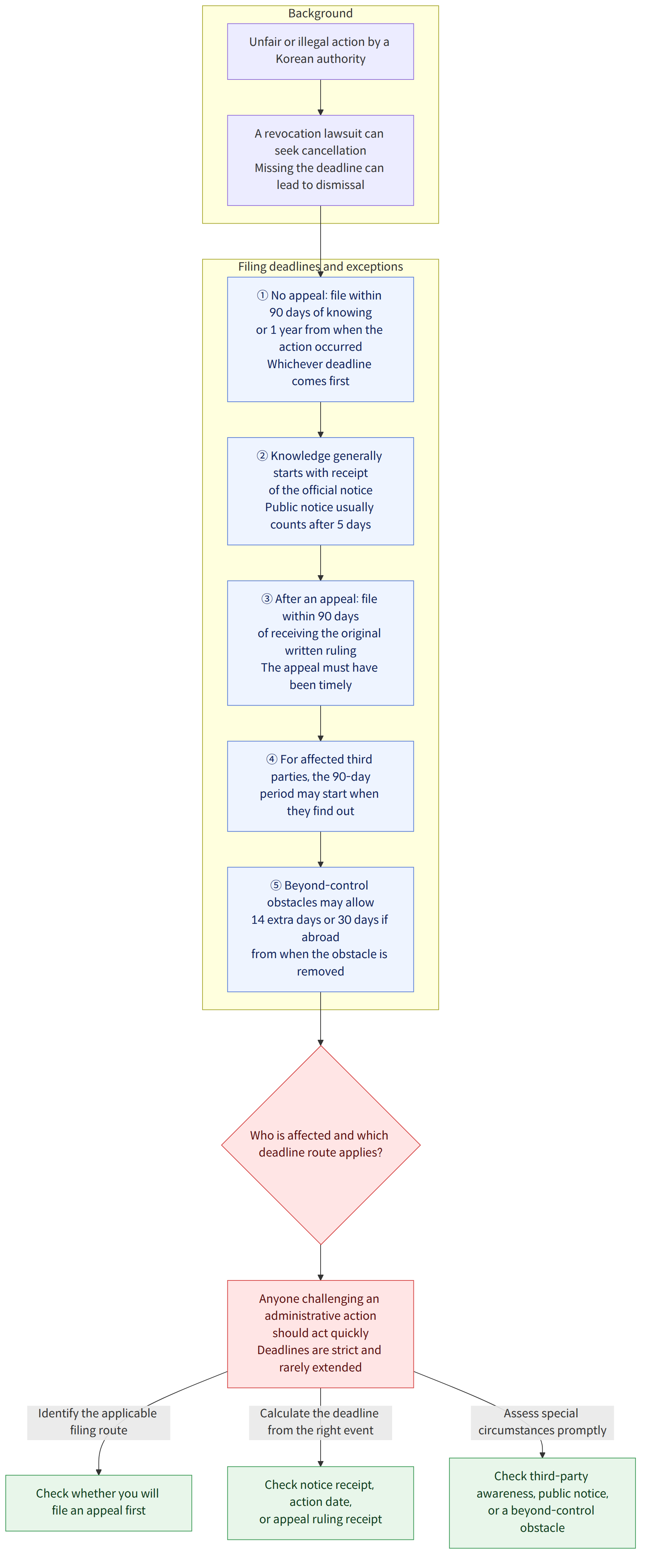
If you have been subjected to an illegal or unfair administrative action (such as a business suspension, fine, or visa-related denial) by a Korean authority, you can file a revocation lawsuit to cancel it. However, unlike civil cases, administrative lawsuits have very strict deadlines called the statute of limitations. If you miss these dates, the court will dismiss your case regardless of how unfair the government action was.
1. If You Go Directly to Court (No Administrative Appeal)
If you choose to file a lawsuit without going through an administrative appeal first, you must follow these two rules. Whichever date comes first becomes your deadline:
- 90 Days from the date you 'knew' of the action: This starts the moment you were actually and specifically aware of the decision (usually when you received the official notice).
- 1 Year from the date the action occurred: This starts when the decision officially took effect, regardless of when you found out.
Important: 'Knowing' doesn't mean you need to understand the legal details or whether it was illegal. Simply receiving the official document is generally enough for the court to assume you 'knew' about it.
2. If You File an Administrative Appeal First
In many cases, foreigners choose to file an Administrative Appeal (a simpler process within the government) before going to court. If you do this:
- You must file the lawsuit within 90 days from the day you receive the official written ruling (original copy) of the appeal.
- Even in this case, the appeal itself must have been filed on time (legally) for this extension to apply.
3. Special Situations and Exceptions
- Third Parties: If you are not the direct recipient of the order but are affected by it, the 90-day rule may not start until you actually find out about the action.
- Public Notice: If the government announces an action via a public newspaper or bulletin board, you are legally considered to have 'known' about it a few days (usually 5 days) after the notice is posted.
- Justifiable Reasons: If you missed the deadline due to reasons beyond your control (like a natural disaster or being abroad), you might get an extension of 14 days (or 30 days if you are abroad) from the time the obstacle is removed.
Summary Table of Deadlines
| Scenario | 90-Day Limit | 1-Year Limit |
| :--- | :--- | :--- |
| No Appeal Filed | From knowing the action | From the action date |
| After Appeal | From receiving the ruling | From the ruling date |
Warning: These deadlines are 'peremptory', meaning they are rarely extended. It is crucial to consult with a legal expert immediately upon receiving any unfavorable notice from the government.
Legal information for foreigners living in Korea.