A Weekend Swing That Stole a Vision
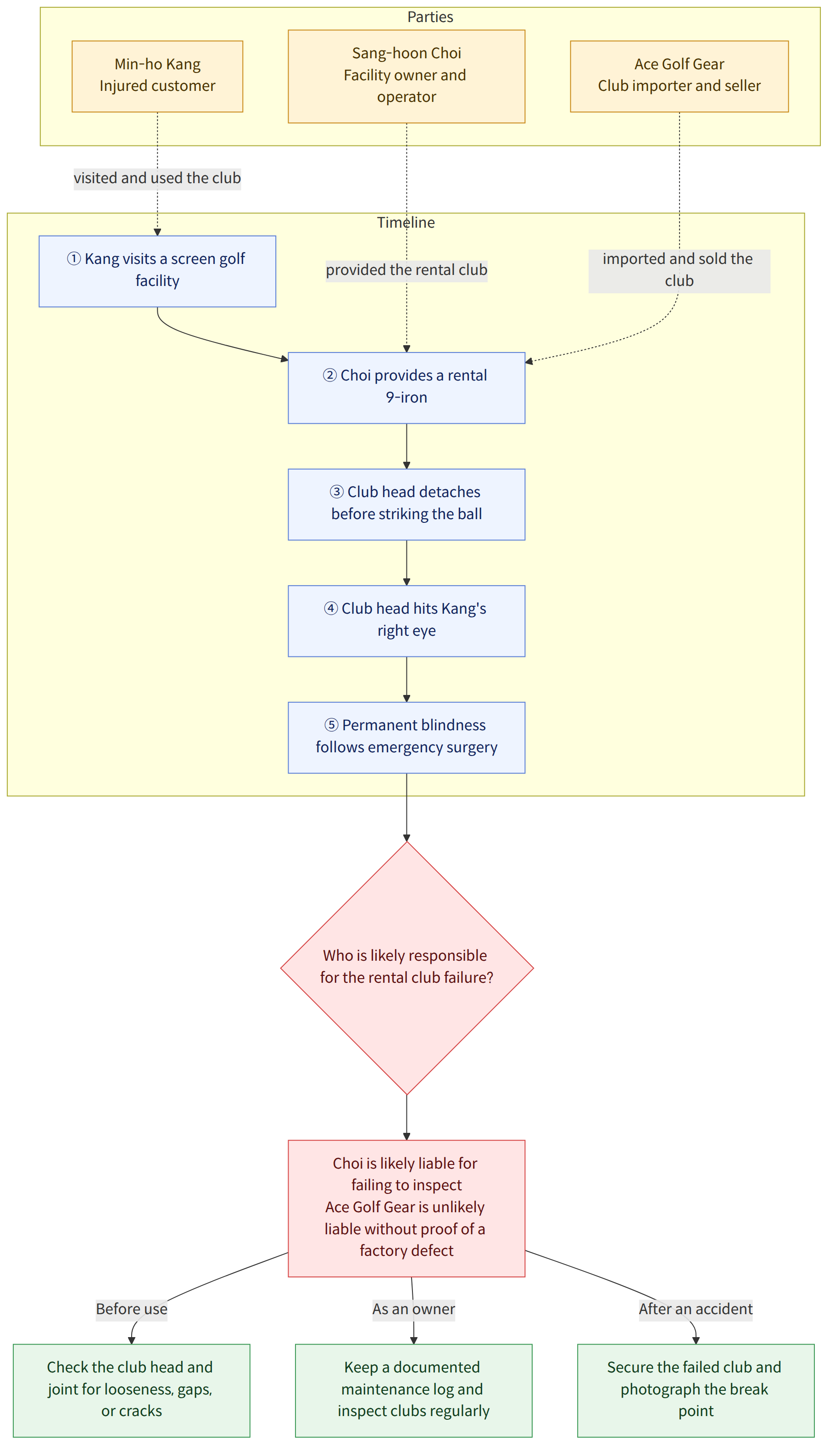
Min-ho Kang, an office worker and amateur golf enthusiast, visited a local screen golf facility with friends for a relaxing Saturday afternoon. The atmosphere was lively until Min-ho picked up a rental 9-iron provided by the shop. He stepped onto the plate, took a practice breath, and initiated a powerful downswing.
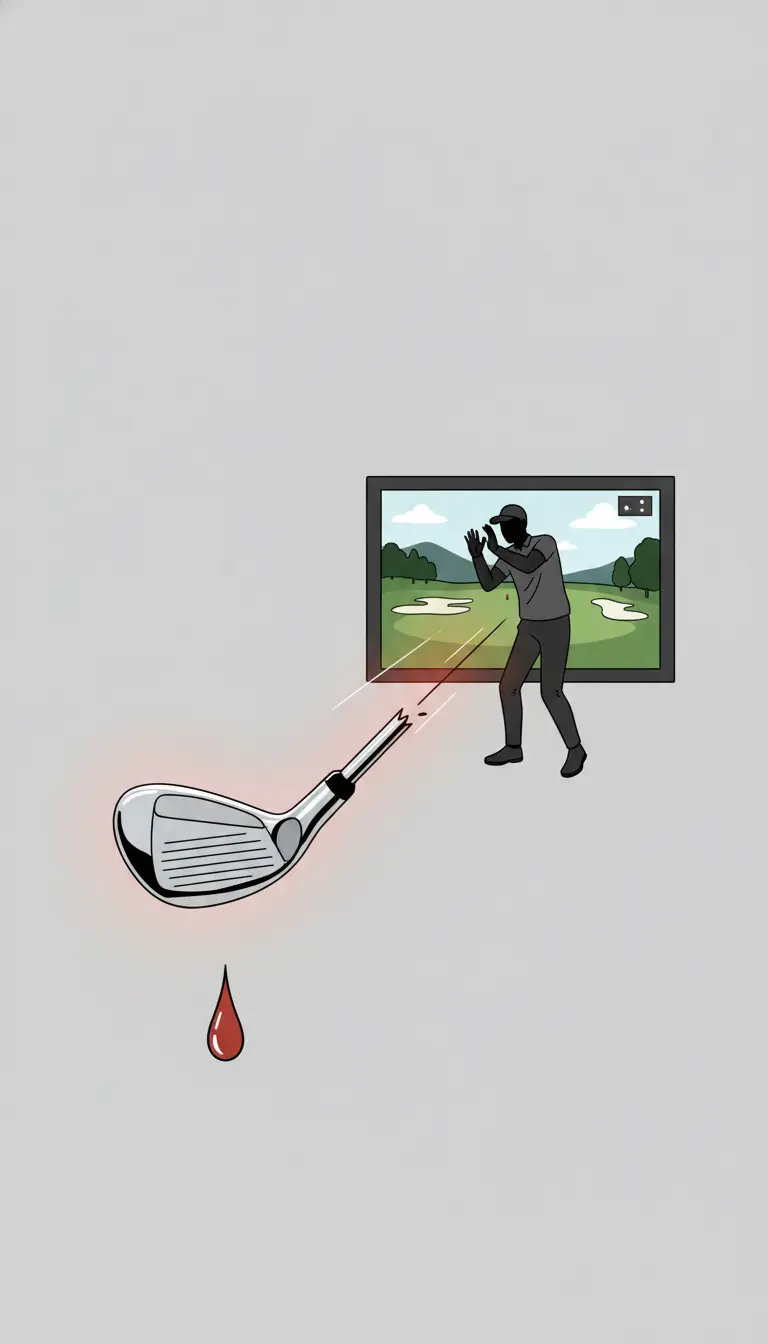
But before the club could even meet the ball, a sickening crack echoed through the room. The heavy iron head detached from the shaft, struck the floor, and ricocheted directly into Min-ho’s right eye. He collapsed in agony. Despite emergency surgery, the diagnosis was devastating: a detached retina and permanent optic nerve damage. Min-ho was left blind in one eye, his life changed in a single second.
The Legal Question: Who Holds the Responsibility?
Facing a lifetime of disability, Min-ho seeks accountability. He targets two parties: Sang-hoon Choi, the owner of the screen golf facility who provided the worn-out equipment, and Ace Golf Gear, the company that imported and sold the club. The core question is: Does the blame lie with the person who failed to maintain the tool, or the company that brought it into the market?
What Korean Law Says: Duty of Care vs. Product Liability
Under the Korean Civil Code and the Product Liability Act, the responsibility for accidents involving public-use objects is categorized into two main areas:
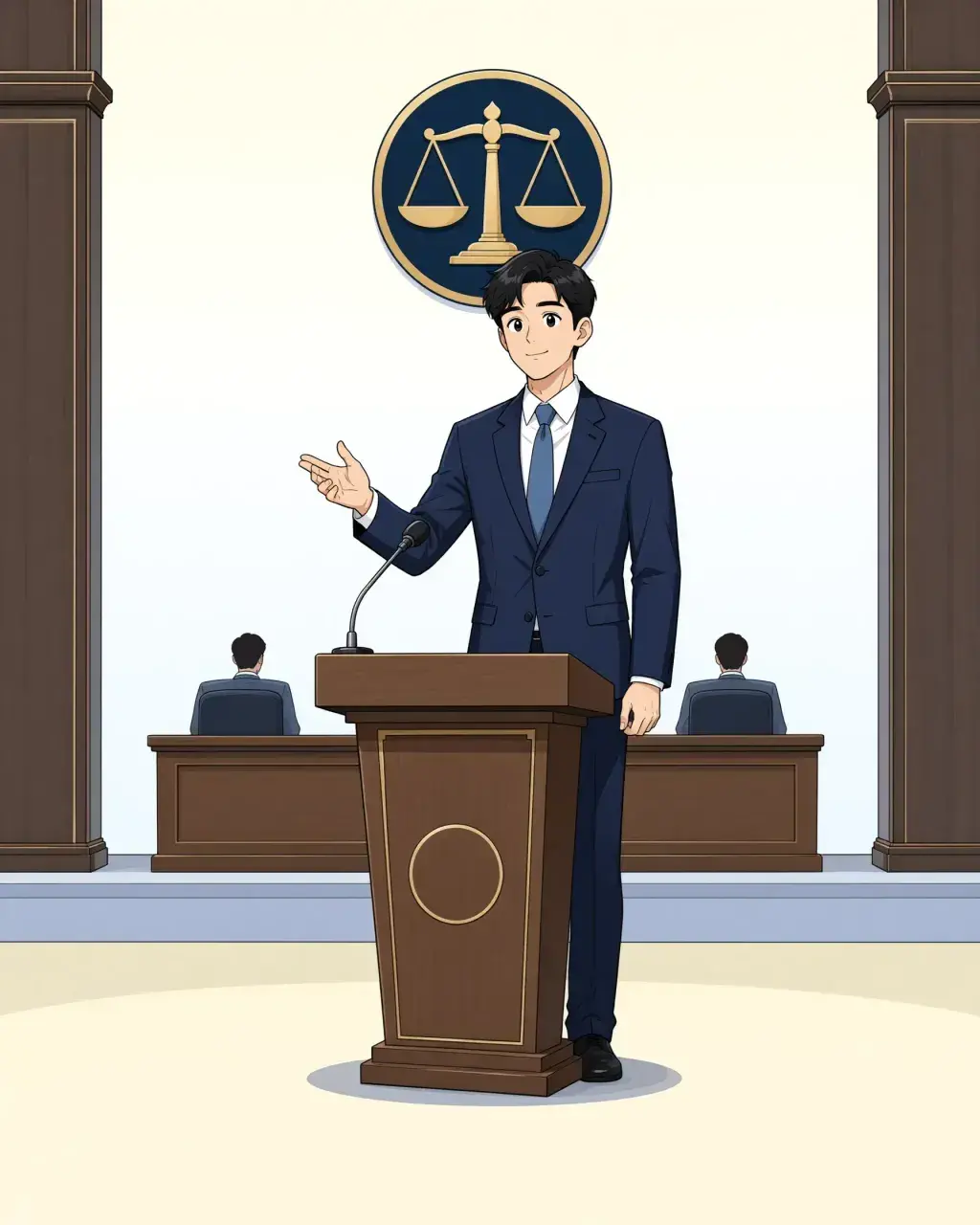
Civil Code Article 758 (Liability of Possessor or Owner of Structure/Object): If a person suffers damage due to a defect in the installation or maintenance of a structure or object, the possessor is liable for damages.
- The Operator's Duty: Screen golf involves high-velocity movements in a confined space. Therefore, an operator has a "professional duty of care" to ensure all equipment is safe. Because these clubs are used repeatedly by many people, the owner must inspect them before handing them to the next customer.
- Manufacturer's Liability: A manufacturer is liable if a product has a defect in design or manufacturing. However, the plaintiff (the victim) must prove the product was used normally and that the defect existed while it was still under the manufacturer's control.
How Korean Courts Approach This
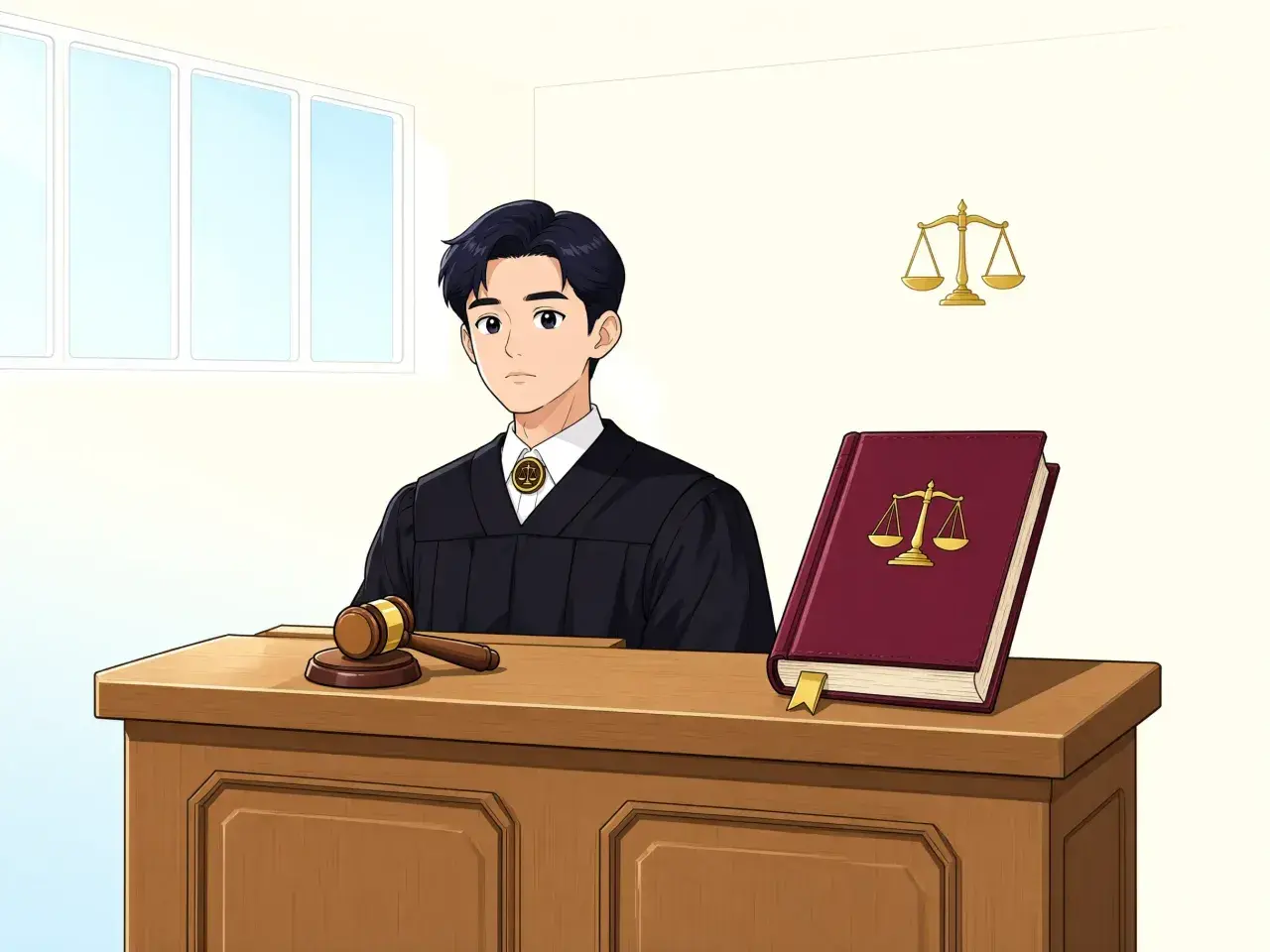
Korean courts typically hold facility operators to a very high standard of maintenance. If a club head detaches before it even hits the ball or the ground, judges see this as a clear indication that the equipment was in a state of extreme fatigue or disrepair.
Regarding the manufacturer, courts are often more conservative. Since rental clubs are used by an unspecified number of people—some of whom may hit the floor repeatedly or use the clubs improperly—it is difficult to prove the defect was there at the factory. Unless there is evidence of a mass recall or a widespread design flaw, the manufacturer is rarely held liable for the failure of a heavily used rental item.
Applying the Law to Min-ho's Case
In Min-ho’s situation, the legal weight falls heavily on the owner, Sang-hoon Choi.
First, the fact that the head flew off mid-swing proves the club’s structural integrity was already compromised. Choi failed his duty to inspect the club for signs of loosening or stress fractures before letting Min-ho use it.
Second, the claim against Ace Golf Gear is unlikely to succeed. Because the club had been in constant use at a commercial facility, the "exclusive control" of the manufacturer was long gone. The damage could have been caused by a previous customer’s misuse, making it impossible to pin the fault solely on the manufacturing process without specific technical evidence of a factory defect.
Conclusion: What Happened, and What Should You Do?
As a result, the court would likely order Sang-hoon Choi to compensate Min-ho for medical bills, lost future income due to his disability, and mental distress (solatium). The manufacturer would likely be cleared of charges.
To avoid such tragedies, here are three practical tips:
- For Users: Never assume rental equipment is safe. Before your first swing, give the club head a firm tug and inspect the ferrule (the joint between the head and shaft) for any gaps or cracks.
- For Owners: Implement a mandatory maintenance log. Inspecting clubs daily and documenting these checks is not just a safety measure—it is your primary legal defense if an unavoidable accident occurs.
- In Case of Accident: Immediately secure the failed equipment. Do not let the owner take it away. Take high-resolution photos of the break point, as this will be the most critical evidence in proving whether the failure was due to long-term neglect.