The Betrayal of Payday: Hana Choi's Story
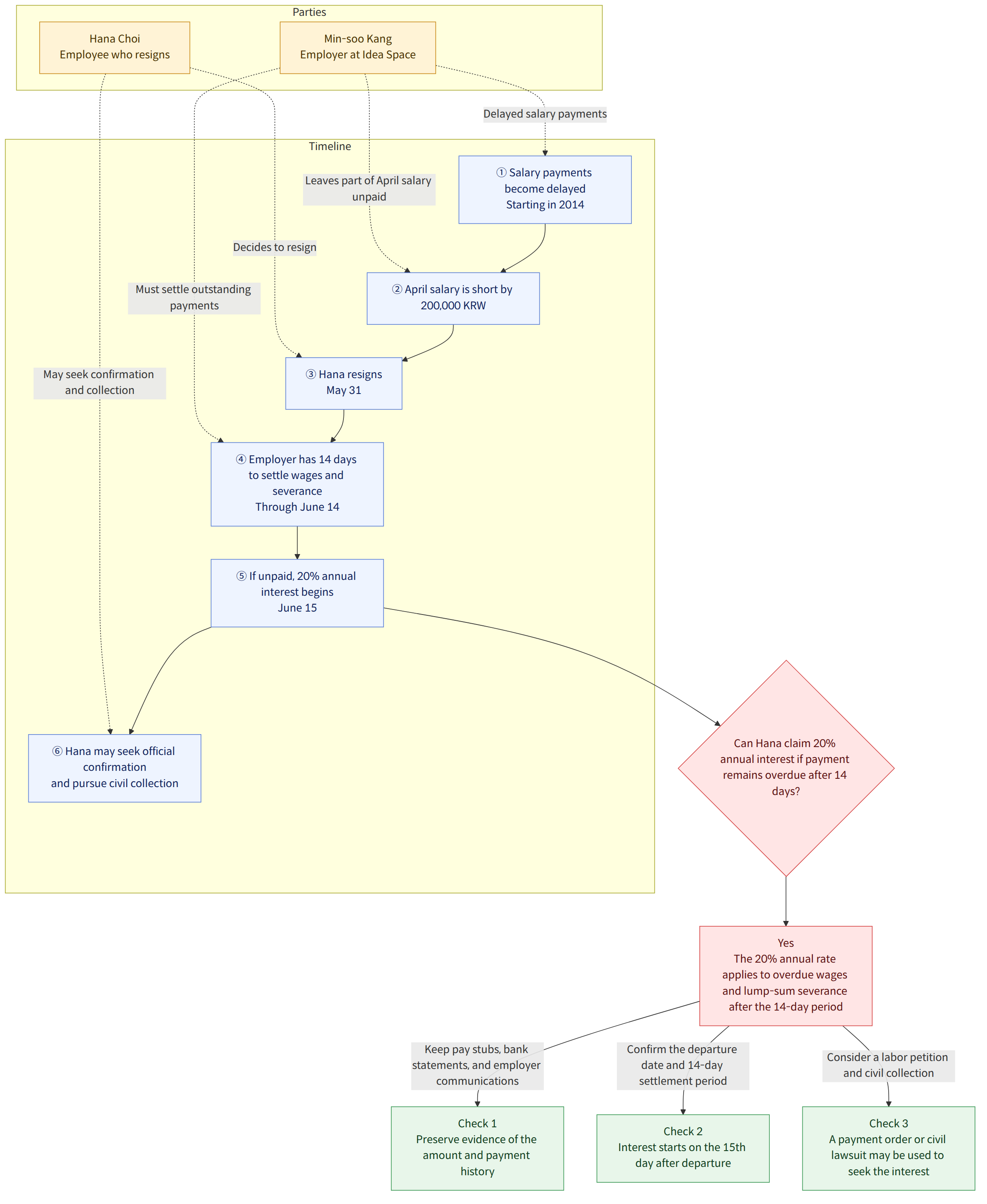
Hana Choi, a senior graphic designer at a boutique studio called 'Idea Space,' used to love her job. However, since 2014, the family-like atmosphere began to sour as her boss, Min-soo Kang, started delaying salary payments citing "temporary cash flow issues." This April, the situation hit a breaking point: out of her 3 million KRW salary, only 2.8 million KRW was deposited. The remaining 200,000 KRW remained unpaid, with no explanation offered.
Exhausted and feeling undervalued after eight years of loyalty, Hana decided to resign at the end of May. But as she calculated the years of irregular payments and her looming severance pay, she felt a deep sense of injustice. "Is it enough to just get the principal amount back?" she wondered. "What about the stress and the time I lost waiting for my own money?"
The Legal Question: Can You Charge Interest on Overdue Wages?
For workers like Hana, the question isn't just about getting the base amount of money they earned. It’s about compensation for the delay. Does Korean law allow an employee to claim interest on unpaid wages, and if so, how much can they legally demand?
What Korean Law Says: The Power of '20% Per Annum'
The Korean Labor Standards Act provides a stringent mechanism to ensure employees are paid promptly upon leaving a job. The law shifts the burden onto the employer the moment the employment relationship ends.
Article 37 of the Labor Standards Act (Interest for Delay in Payment of Wages)If an employer fails to pay the wages or retirement benefits within 14 days after the cause for payment (such as resignation or death) occurs, the employer shall pay interest for the delay at a rate prescribed by Presidential Decree, up to 40% per annum, considering economic conditions.
According to Article 17 of the Enforcement Decree of the same Act, this "rate prescribed by Presidential Decree" is currently fixed at 20% per year. This is significantly higher than the standard civil interest rate (5%) or commercial interest rate (6%) in Korea.
- Applicability: This high rate applies to unpaid wages and lump-sum retirement benefits (severance pay).
- The 14-Day Grace Period: The interest begins to accrue from the 15th day after the employee leaves the company.
- Exceptions: The rate may be limited only in extreme circumstances, such as natural disasters or a court-ordered bankruptcy.
How Korean Courts Approach This
Korean courts treat the protection of wages as a matter of fundamental survival. Consequently, judicial principles generally lean heavily in favor of the employee regarding delayed interest. Judges rarely accept the excuse of "financial hardship" as a valid reason to avoid the 20% penalty. The high interest rate is intentionally punitive, designed to deter employers from using their employees' unpaid wages as a source of zero-interest financing for their businesses.
Applying the Law to Hana's Case
If Hana Choi resigns on May 31st, her employer, Min-soo Kang, has until June 14th to settle all outstanding payments, including the 200,000 KRW from April and her total severance pay.
If the clock strikes midnight on June 15th and the money hasn't arrived, Hana is legally entitled to start charging 20% annual interest on the entire balance. For instance, if the total amount owed is 10 million KRW and the debt remains unpaid for a year, Mr. Kang would owe Hana an additional 2 million KRW in interest alone. While the interest rate during her employment might only be 5% (standard civil rate), her status as a 'former employee' activates the powerful 20% legal protection.
Conclusion: What Happened, and What Should You Do?
For Hana, the path forward is clear. She can file a petition with the Ministry of Employment and Labor to secure an official confirmation of the unpaid amount. However, since the Labor Office primarily focuses on the criminal aspect of unpaid wages and the principal amount, Hana should also consider filing a Payment Order (a simplified civil procedure) or a civil lawsuit to collect the 20% interest.
If you find yourself in a situation like Hana's, keep these tips in mind:
- Document Everything: Keep copies of pay stubs, bank statements, and all communication (texts, emails) with your employer regarding the debt. This proves when the payment was due.
- Use the 14-Day Rule as Leverage: Inform your employer in writing that if payments are not settled within 14 days of your departure, you will seek the full 20% interest penalty through civil action. This often motivates employers to pay up quickly.
This column provides general legal information. For specific legal disputes, please consult with a qualified legal professional.