Introduction: The Engineer with Two Identities
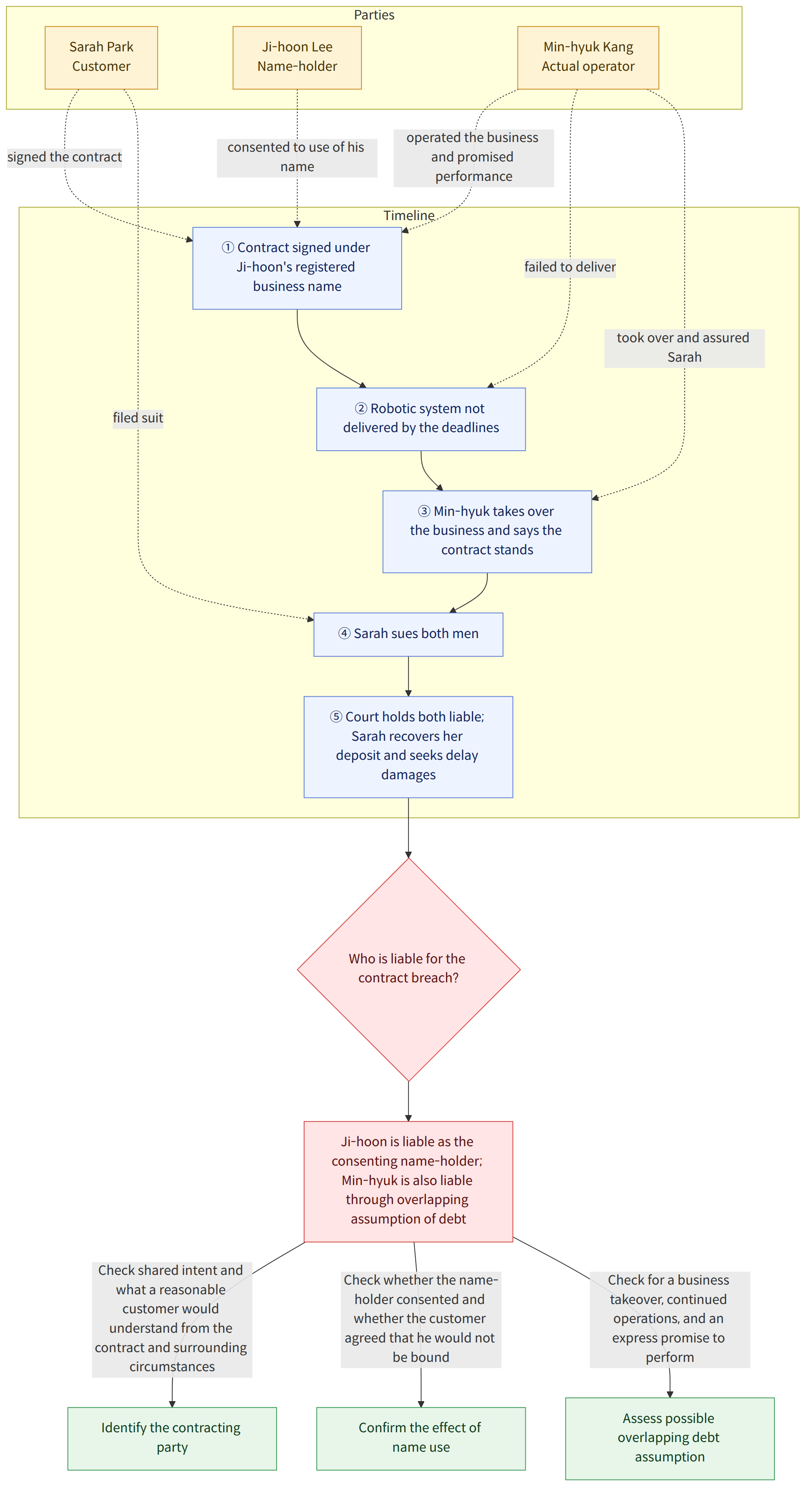
Sarah Park, the CEO of a tech startup, was thrilled to find Min-hyuk Kang, a renowned engineer, to build a specialized robotic system for her factory. When it came time to sign the contract, however, the name on the business registration wasn't Min-hyuk's. Instead, it was Ji-hoon Lee. Min-hyuk explained smoothly, "Ji-hoon is my business partner and the co-representative. I handle the technical side, he handles the paperwork."
In reality, Min-hyuk had a history of bankruptcy and tax arrears that prevented him from registering a business in his own name. With Ji-hoon’s permission, Min-hyuk used Ji-hoon’s identity to run the business. Sarah, unaware of this background, signed the contract with the entity registered under Ji-hoon's name.
Months later, once Min-hyuk’s credit issues were resolved, he officially "took over" the business from Ji-hoon. He closed Ji-hoon’s registration and opened a new one under his own name, continuing the same operations. Min-hyuk assured Sarah, "The contract stands; it's just under my name now." But as deadlines passed, the robotic system was nowhere to be found. Sarah wanted to sue for breach of contract but was left with a headache: Is the liable party Ji-hoon (the name on the contract) or Min-hyuk (the person who actually took her money and promised results)?
The Legal Question: Identifying the Contract Party
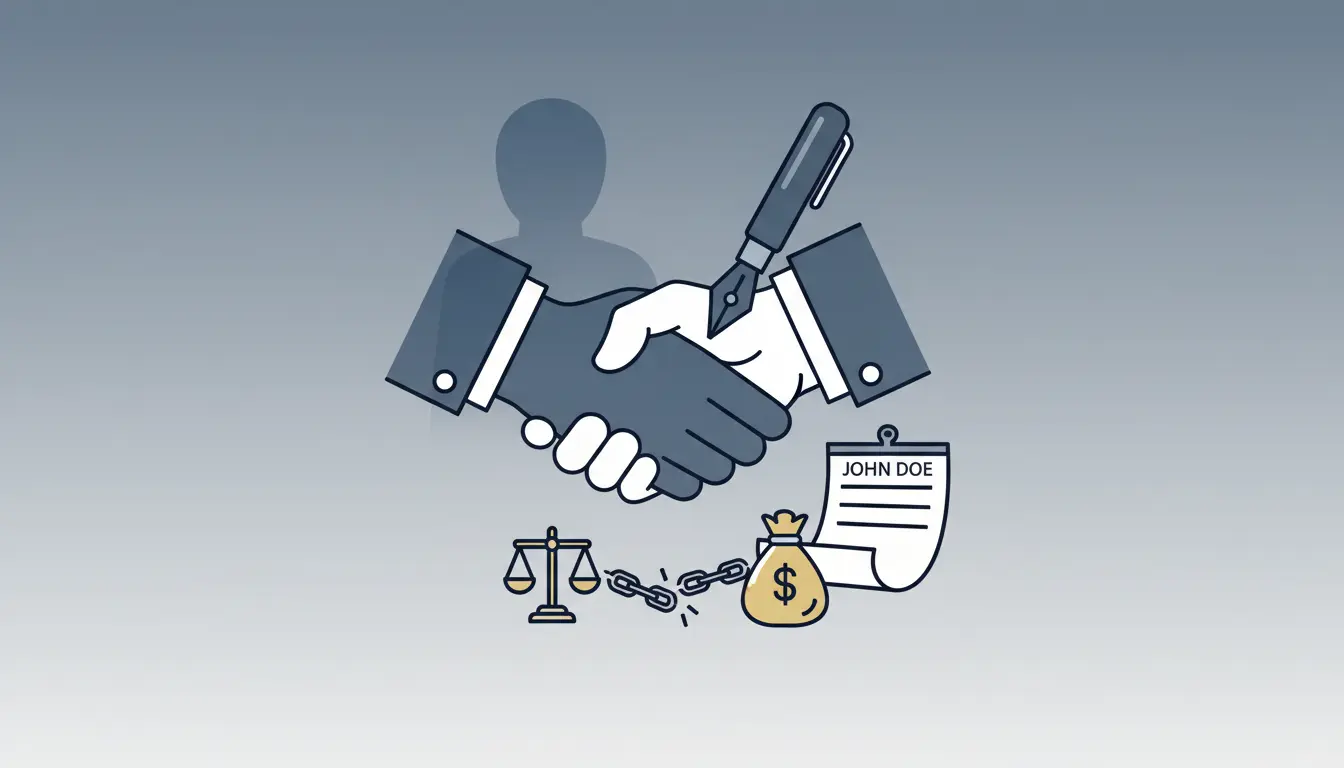
The core legal issue here is identifying the true party to a contract when an actor signs it using another person’s name. Should the law follow the "name on the paper" (the name-holder) or the "person in the room" (the actor)?
What Korean Law Says
Korean legal principles provide a two-step framework for determining the party to a contract:
First, the Subjective Test: If the actor and the counterparty have a shared understanding of who the contract party is, that person is the party.
Second, the Objective Test: If their intentions are unclear or conflicting, the party is determined based on how a reasonable person in the counterparty’s shoes would have understood the situation.
The Supreme Court of Korea has ruled that when an actor performs a legal act under another's name, the court must determine the party based on the nature, content, and purpose of the contract, as well as the circumstances before and after the signing. The standard is: Who would a reasonable person understand to be the contracting party? (Supreme Court Decision 2010Da83199)
Regarding those who lend their names, the law is equally clear:
- If a person consents to another person using their name to sign a contract, the legal effects of that contract generally fall on the name-holder.
- Unless the counterparty specifically agreed that the name-holder would not be bound, the name-holder remains legally responsible.
How Korean Courts Approach This
Korean courts prioritize the protection of "transactional safety." This means protecting people like Sarah Park, who acted in good faith without knowing about the secret name-borrowing arrangement. Therefore, courts generally hold the name-holder (Ji-hoon) liable because he allowed his identity to be used for commercial credit.
However, the law doesn't let the actual operator (Min-hyuk) off the hook. When Min-hyuk officially took over the business registration and told Sarah he would fulfill the deal, courts often view this as an "Overlapping Assumption of Debt" (Cumulative Debt Assumption). This means Min-hyuk has joined the obligation alongside Ji-hoon, rather than replacing him.
Applying the Law to the Case
In Sarah’s situation, she has the legal right to pursue both men for different reasons:
- Against Ji-hoon Lee: As the person who permitted his name to be used for the contract, he is the primary party to the original agreement. Sarah relied on the business registration under his name. Since the contract was breached, Ji-hoon is liable for damages.
- Against Min-hyuk Kang: While he wasn't the "name-holder" at the start, his subsequent actions—taking over the business assets and explicitly stating his intent to perform the contract—make him liable under the principle of overlapping debt assumption.
Because Min-hyuk continued the same business at the same location with the same equipment, the court would likely rule that he assumed the liabilities of the "previous" business registered under Ji-hoon.
Conclusion: What Happened, and What Should You Do?
Sarah Park successfully filed a lawsuit against both Min-hyuk Kang and Ji-hoon Lee. The court ruled that they were jointly and severally liable. Sarah was able to recover her deposit and seek damages for the delay, as both the name-holder and the actual operator were held accountable by the law.
If you find yourself in a similar situation, keep these practical tips in mind:
- Verify Identities Early: Always cross-reference the business registration certificate with the ID of the person you are dealing with. If they don't match, ask for a formal Power of Attorney.
- Document Business Changes: If a business changes its representative or registration during your project, get a written "Contract Assumption Agreement" signed by both the old and new representatives.
- Don't Assume Only One Person is Liable: In name-borrowing cases, you often have the right to sue both the person whose name was used and the person who actually did the work. Consult a lawyer to ensure you are targeting all possible sources of recovery.