1. The Desperate Manager and the Unexpected Wire Transfer
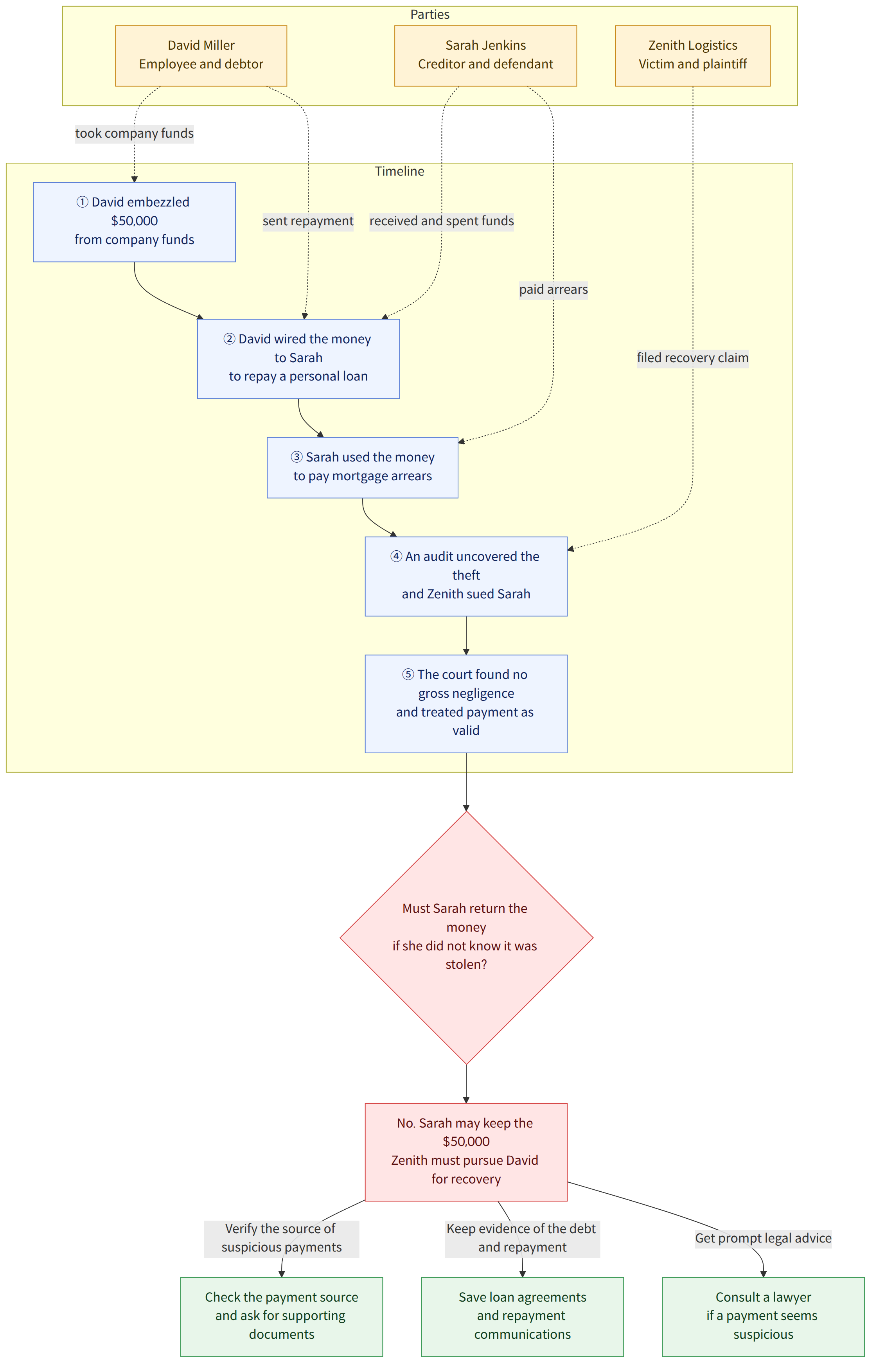
David Miller was a trusted accounting manager at 'Zenith Logistics,' a mid-sized textile firm where he had worked for over a decade. However, David harbored a dark secret: a mountain of debt from failed cryptocurrency investments. Driven to a corner by aggressive debt collectors, David finally crossed a line he could never uncross. He surreptitiously withdrew $50,000 from one of the company’s internal accounts.
David immediately wired the entire sum to Sarah Jenkins, a high school friend who had lent him the money for what she thought was a legitimate business venture. While Sarah knew David had been struggling financially, she assumed he had managed to secure a loan or sell some assets, given his stable position at a reputable company. Relieved, Sarah used the money to pay off her own mortgage arrears.
Months later, a routine audit at Zenith Logistics uncovered David's embezzlement. While the company pursued criminal charges against David, they also tracked the $50,000 wire transfer to Sarah. The company filed a lawsuit against her, claiming, "The money you received was stolen from us. It constitutes unjust enrichment and must be returned immediately."
2. The Core Legal Question
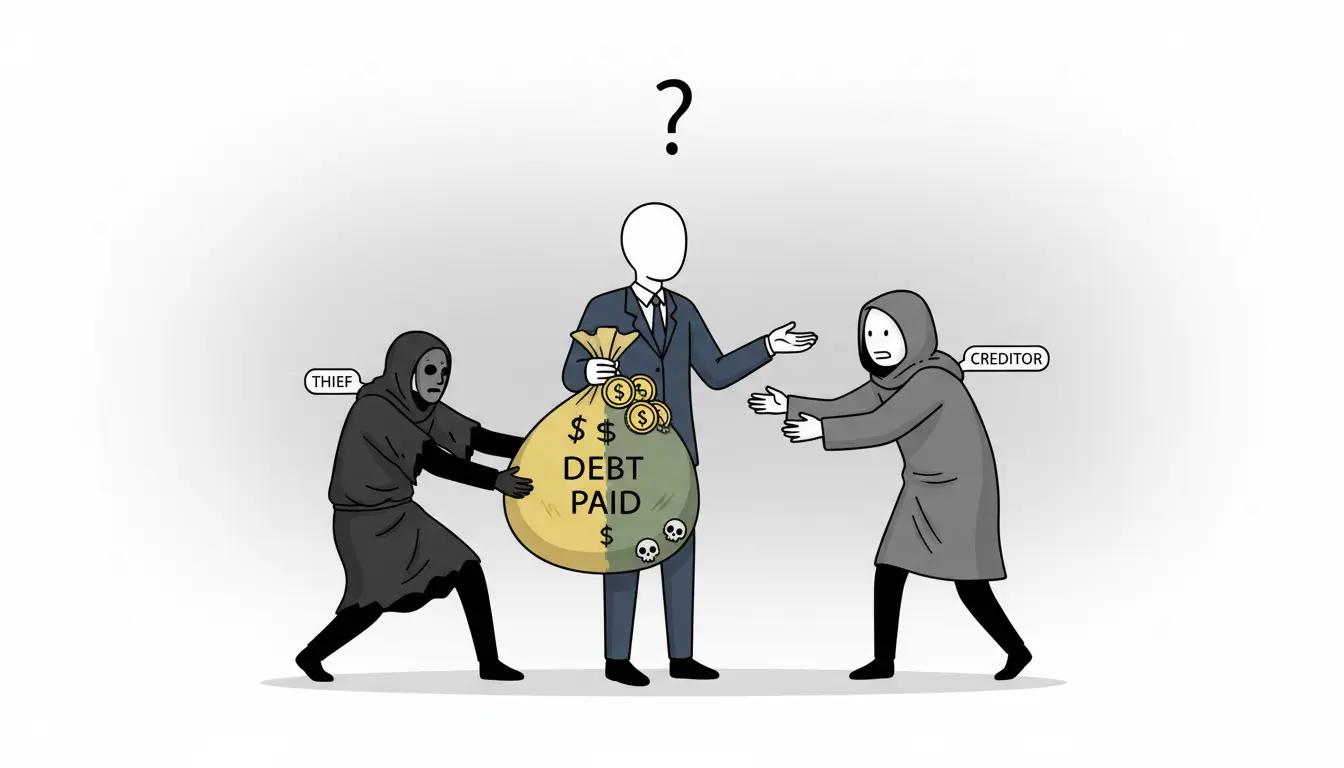
This case centers on a critical legal dilemma: If a debtor (David) uses embezzled funds to pay a creditor (Sarah), and the creditor was unaware of the theft, is the creditor legally obligated to return the money to the victim (the company)? In legal terms, the question is whether Sarah’s gain qualifies as 'unjust enrichment' lacking legal cause.
3. What Korean Law Says About Unjust Enrichment
The Korean Civil Code stipulates that anyone who gains a benefit at the expense of another without a valid legal reason must return that benefit.
Civil Code Article 741 (Definition of Unjust Enrichment)A person who derives a benefit from the property or services of another without any justifiable legal ground and thereby causes loss to the other person shall return such benefit.
Generally, if a debtor steals money to pay a debt, there is a clear causal link between the victim's loss and the creditor's gain. However, to maintain the stability of financial transactions, the law provides a shield for creditors depending on their state of mind.
4. How Korean Courts Approach This
The Supreme Court of Korea has established a clear threshold for these cases. The outcome depends entirely on the creditor's subjective awareness at the time of payment:
- Bad Faith or Gross Negligence: If the creditor knew the money was embezzled (bad faith) or could have easily known with minimal attention but failed to do so (gross negligence), the payment is considered to lack "legal ground" in relation to the victim. In this case, the creditor must return the money.
- Good Faith or Simple Negligence: If the creditor had no idea the funds were stolen (good faith) and there was no major reason for suspicion (even if they were slightly careless), the payment is deemed valid. The creditor is allowed to keep the money.
5. Applying the Law to the Case: Must Sarah Pay?
In the battle between Zenith Logistics and Sarah, the company argued that since Sarah knew David was in financial trouble, she should have suspected the $50,000 came from an illicit source. However, the court analyzed the situation differently.
First, David held a respectable position for ten years, giving Sarah a reason to trust his ability to eventually find the funds. Second, the money was wired from David's personal account, not the company's, giving Sarah no obvious red flags.
Ultimately, the court ruled that Sarah did not act with gross negligence. While she knew of David’s distress, expecting her to foresee that he would commit a felony was deemed an unreasonable burden for an ordinary citizen. Her receipt of the money was ruled a valid debt repayment.
6. Conclusion: What Happened, and What Should You Do?
As a result, Sarah Jenkins was not required to return the $50,000 to Zenith Logistics. The law protected her as a creditor who received payment in good faith. Zenith Logistics, meanwhile, had to focus its recovery efforts solely on David Miller through civil damages and criminal restitution.
If you find yourself in a similar situation where a debtor pays you with suspicious funds, consider these practical tips:
- Verify the Source: If a debtor attempts to pay you from a corporate account or a third-party's name for a personal debt, ask for documentation explaining the source. This helps prove your "good faith" later.
- Document Everything: Keep records of your loan agreements and any communications regarding the repayment. This evidence is crucial in proving that the payment was for a legitimate, pre-existing debt.
- Seek Legal Counsel Immediately: Lawsuits involving unjust enrichment often turn on the fine line between "simple negligence" and "gross negligence." If you receive a demand letter, consult a lawyer to build a defense showing you had no reasonable way to know the funds were tainted.