The Case of the Missing Evidence: Ji-hoon's Frustration
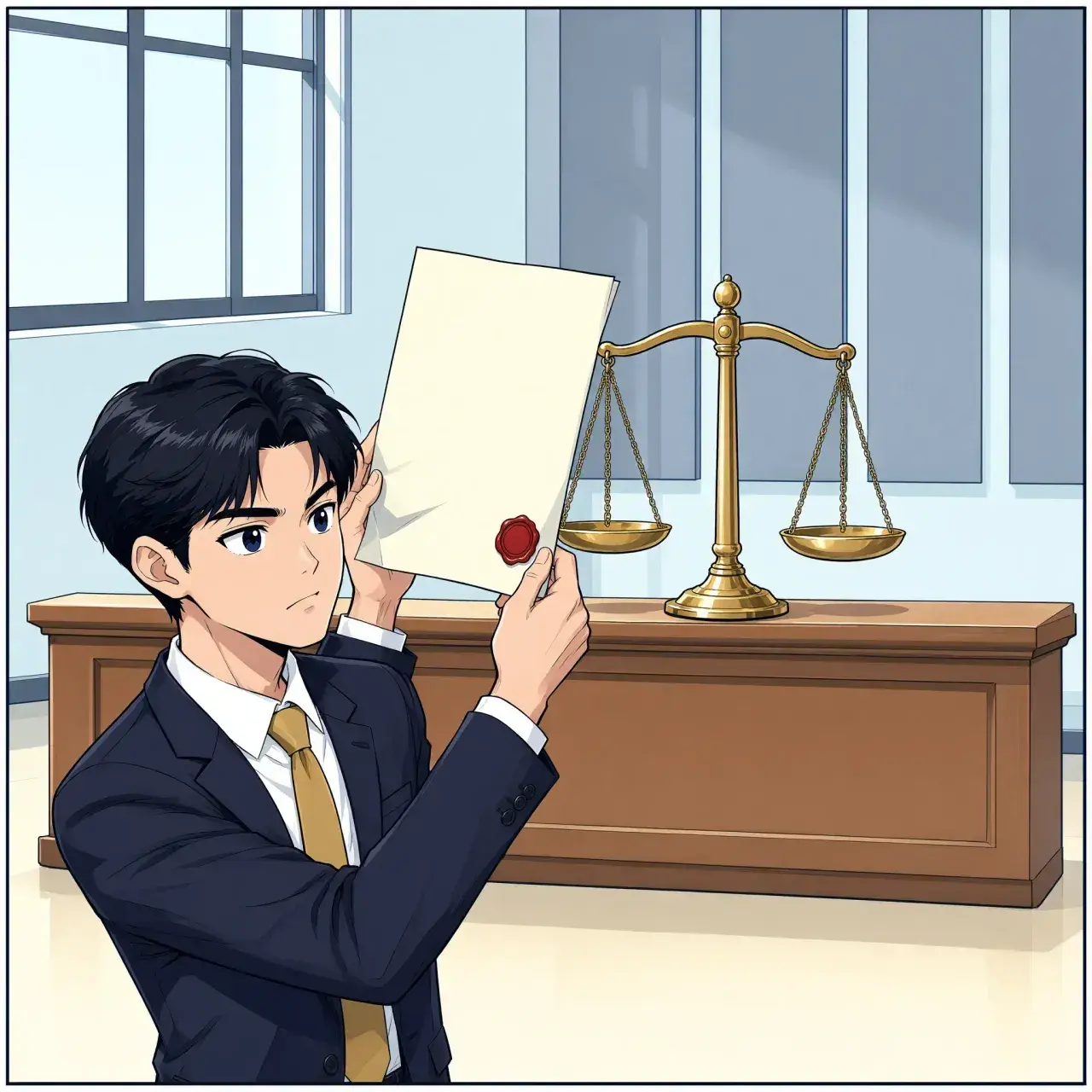
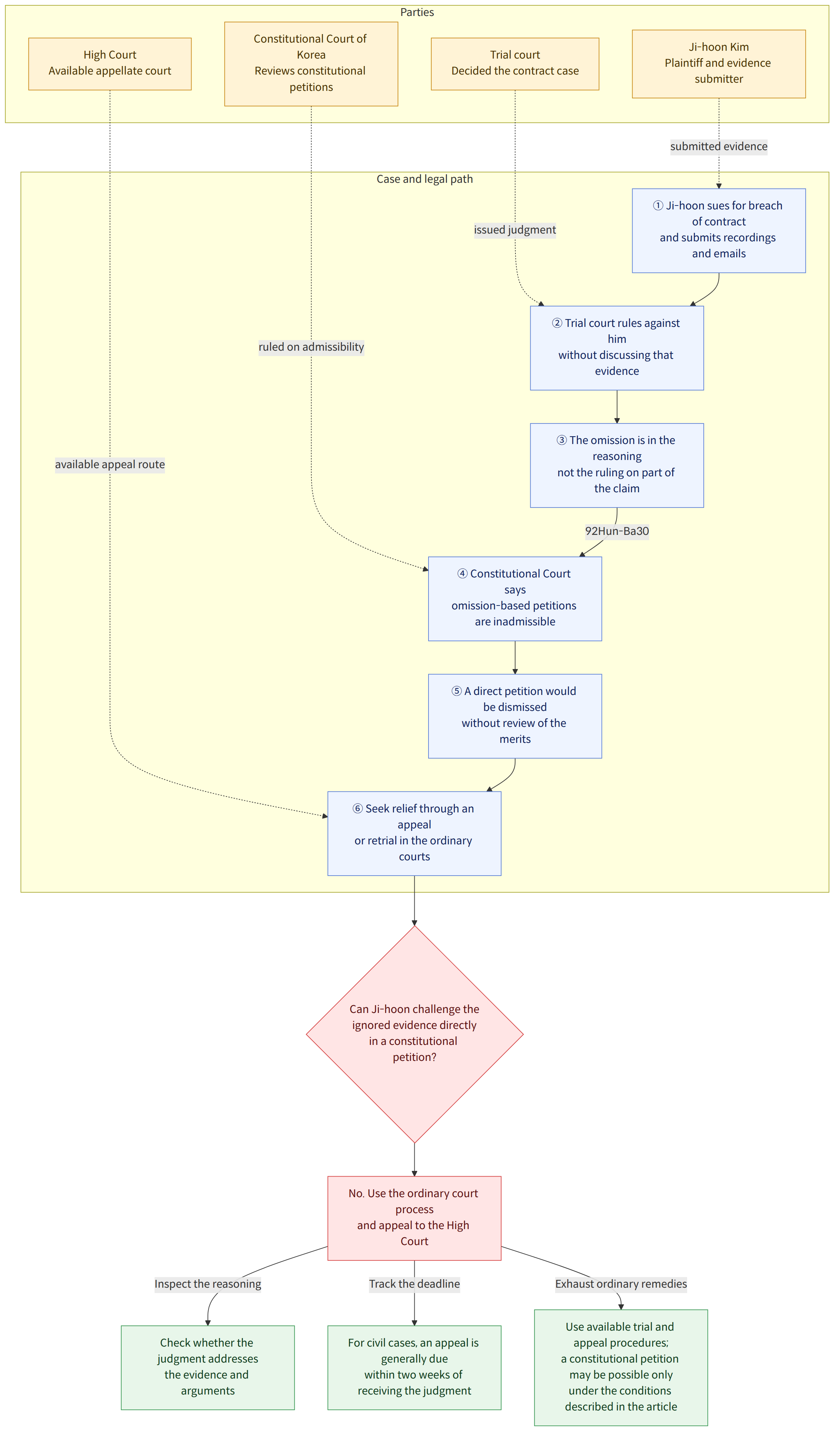
Ji-hoon Kim, the CEO of a small IT firm, was certain he would win his breach-of-contract lawsuit. He had submitted what he called the 'smoking gun'—a series of voice recordings and emails where the defendant explicitly promised to pay the outstanding balance. Throughout the trial, Ji-hoon's legal team centered their entire strategy around these records.
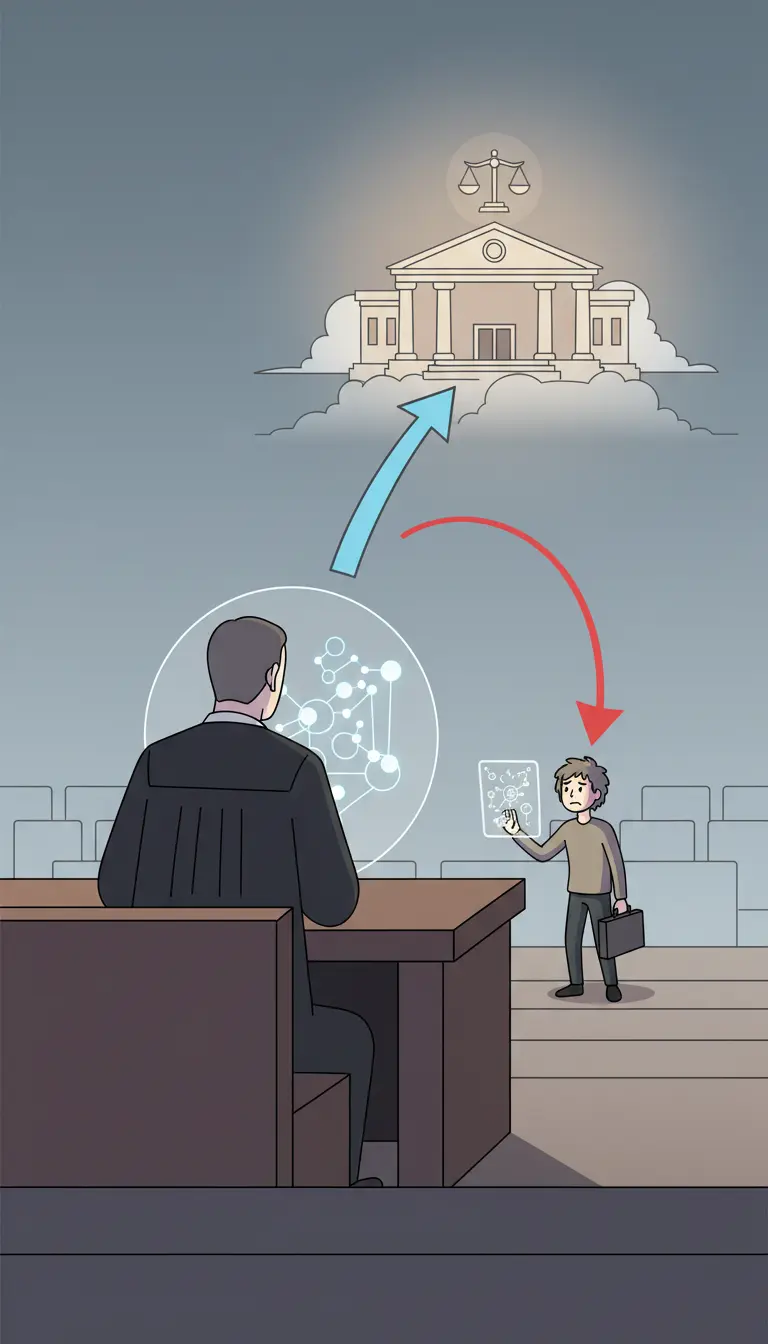
However, when the written judgment arrived, Ji-hoon was stunned. Not only did he lose, but as he scanned the pages, his heart sank. There wasn't a single mention of the voice recordings or the emails. It was as if his most critical evidence didn't exist in the eyes of the judge. Feeling that his constitutional right to a fair trial had been trampled, Ji-hoon declared he would take the case straight to the Constitutional Court of Korea.
The Legal Question: Can Omitted Arguments Trigger a Constitutional Petition?
This raises a vital question for anyone navigating the Korean legal system: If a court fails to rule on a specific argument or ignores a key piece of evidence (a situation known as 'omission of judgment'), does this constitute a violation of fundamental rights that can be challenged via a Constitutional Petition?
What Korean Law Says About Trial Exclusion
Under Article 68, Paragraph 1 of the Constitutional Court Act, citizens can file a petition if their fundamental rights are violated by the exercise (or non-exercise) of public power. However, there is a major catch:
"Any person... may request a delayed adjudication on constitutional complaint to the Constitutional Court, excluding trials of the ordinary courts."
In Korea, the 'Trial Exclusion' rule means that you cannot generally challenge a court's specific decision at the Constitutional Court. The law assumes that errors in judgment should be corrected through the hierarchy of the judiciary (Appellate Courts and the Supreme Court).
When a court omits a judgment, the remedy depends on the type of omission:
- Omission in the Ruling (Order): If the court forgot to rule on part of your claim (e.g., you sued for $100 and $50, but they only ruled on the $100), you must request a supplemental judgment.
- Omission in the Reasoning: If the court ruled on the claim but ignored your arguments or evidence (like Ji-hoon's case), you must seek relief through an appeal or a retrial.
How Korean Courts Approach This
The Constitutional Court has remained firm on this issue for decades. In a landmark 1996 decision (92Hun-Ba30), the Court ruled that a petition seeking to cancel a trial or request an additional judgment due to 'omission of judgment' is inadmissible.
The Court's logic is simple: if the judiciary has established procedures (like appeals) to fix these errors, those procedures must be exhausted first. Jumping straight to the Constitutional Court undermines the finality of regular court judgments and creates a 'fourth instance' of trial that the law does not permit.
Applying the Law to Ji-hoon’s Case
Let’s analyze Ji-hoon’s situation. The judge failed to address his voice recordings in the 'Reasoning' section of the judgment. In legal terms, this is an 'omission of the means of attack or defense.'
Because this error occurred within the context of a trial, the Constitutional Court will not hear his case. If Ji-hoon files a petition now, it will be dismissed without a hearing on the merits. His proper path is to file an appeal to the High Court, arguing that the lower court failed to evaluate essential evidence, which led to a flawed conclusion.
Conclusion: What Happened, and What Should You Do?
Ji-hoon Kim was advised that his path to justice lies in the Appellate Court, not the Constitutional Court. By focusing his appeal on the specific omission of the 'smoking gun' evidence, he has a strong chance of having the case reconsidered.
If you find yourself in a similar situation where a judgment seems to ignore your best arguments, keep these tips in mind:
- Analyze the 'Reasoning' (이유) Section: Don't just look at who won or lost. Check if every piece of evidence you submitted was actually addressed by the judge.
- Watch the Clock: You generally have only two weeks from the date you receive the written judgment to file an appeal in civil cases. Do not waste this time preparing a Constitutional Petition that will likely be rejected.
- Exhaust All Remedies: You can only approach the Constitutional Court after you have gone through every possible trial and appeal, and even then, only if the court applied a law that was already declared unconstitutional.