Beyond Reinstatement: The Battle for Dignity
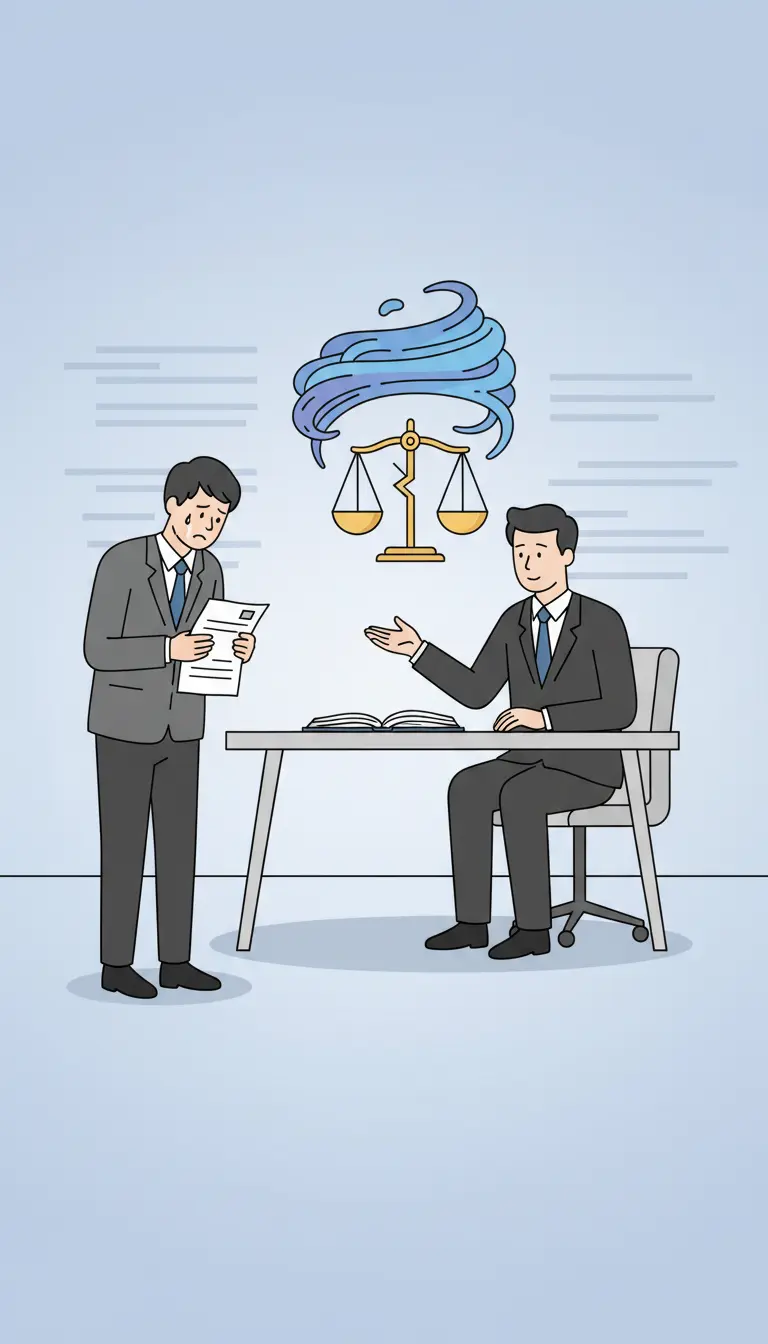
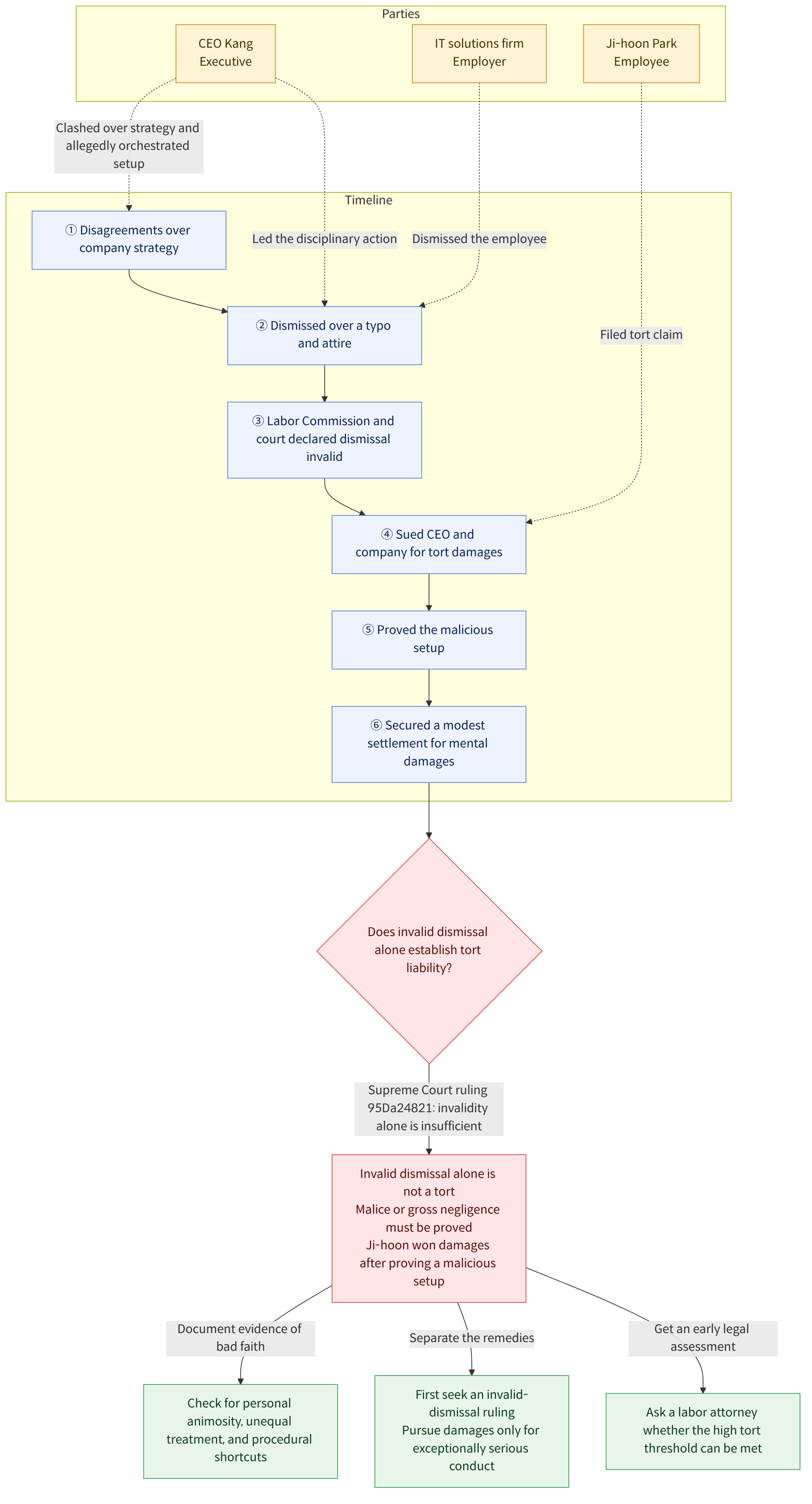
Ji-hoon Park, a senior manager with over a decade of experience at a leading IT solutions firm, was blindsided one morning. Shortly after a series of disagreements with CEO Kang regarding the company's new strategic direction, Ji-hoon was hauled before a disciplinary committee. The charges? A minor typo in a project proposal and a single instance of 'inappropriate attire' during an external meeting. Despite his stellar record, he was summarily dismissed.
Ji-hoon fought back. The Labor Commission and eventually the court ruled that the dismissal was an abuse of disciplinary power and therefore null and void. While the path to reinstatement was cleared, Ji-hoon remained haunted by the experience. The humiliation and the rumors surrounding his exit had taken a heavy toll on his mental health. He decided to sue CEO Kang and the company for 'tort' damages, seeking compensation for his emotional suffering.
The Legal Question: Is Every Unjust Dismissal a Tort?
Many employees in Ji-hoon's shoes ask: "If the court ruled my dismissal was invalid, doesn't that mean the employer acted illegally? Can't I get compensation for the mental trauma they caused?" In legal terms, the question is whether an invalid dismissal automatically constitutes a "tort" (an illegal act) under the Civil Act, triggering liability for damages.
What Korean Law Says About Employer Liability
Under Korean law and Supreme Court precedents, a dismissal being declared invalid does not automatically translate into a tort. The standards for proving a tort are much higher than the standards for proving a dismissal was simply "unjust."
"Even if an employer's disadvantageous treatment, such as dismissal, is judged invalid for lack of justification, that fact alone does not immediately constitute a tort." (Supreme Court Ruling 95Da24821)
To establish tort liability, one of the following must generally be proven:
- Malicious Intent: The employer fabricated grounds for dismissal specifically to drive the employee out of the workplace.
- Gross Negligence: The grounds for dismissal were so obviously invalid that any reasonable person could have seen it, yet the employer proceeded regardless.
How Korean Courts Approach This
Korean courts balance the employer's right to manage and discipline with the worker's rights. If the disciplinary committee members (who are often not legal experts) misinterpreted complex regulations or made a judgment call in good faith based on the available facts, the court is unlikely to find them liable for a tort, even if their decision is later overturned.
If the employer followed due process, conducted a proper hearing, and had a plausible (even if ultimately insufficient) reason to believe the employee committed a violation, the court views this as the employer having fulfilled their 'duty of care.' In such cases, the remedy for the employee is limited to reinstatement and back pay, with no additional 'pain and suffering' damages.
Applying the Law to Ji-hoon’s Case
In Ji-hoon's scenario, the court would look at the absurdity of the charges. Firing a 10-year veteran over a typo and a dress code issue is objectively unreasonable. Furthermore, the timing—immediately following a clash with the CEO—strongly suggests a retaliatory motive.
If Ji-hoon can show that CEO Kang used the disciplinary process as a weapon to bypass labor protections, the court would likely rule that the company committed a tort. This would allow Ji-hoon to recover not just his lost wages, but also 'alimony' or moral damages for the violation of his personality rights and the resulting mental distress.
Conclusion: What Happened, and What Should You Do?
Ji-hoon eventually won his case, securing a modest settlement for mental damages because he was able to prove the 'malicious setup' orchestrated by the CEO. However, winning such a claim is notoriously difficult for most employees.
If you find yourself facing an unjust disciplinary action, consider these practical steps:
- First, focus on evidence of 'Bad Faith'. Document any instances of personal animosity, disparate treatment (others not being punished for the same acts), or procedural shortcuts taken by the employer.
- Second, distinguish your remedies. Your first priority should be the Labor Commission to prove the dismissal is 'invalid.' This is the foundation. A separate civil lawsuit for damages should only be pursued if the employer’s conduct was exceptionally egregious.
- Third, consult a specialist early. A labor attorney can help you determine if your case meets the high threshold of 'obvious illegality' required for a tort claim.
Standing up for your rights is essential, but doing so with a clear understanding of the legal thresholds will save you from unnecessary frustration.
This column is provided for informational purposes only and does not constitute legal advice for specific cases.