1. A Heart Stopped on a Cold Sofa
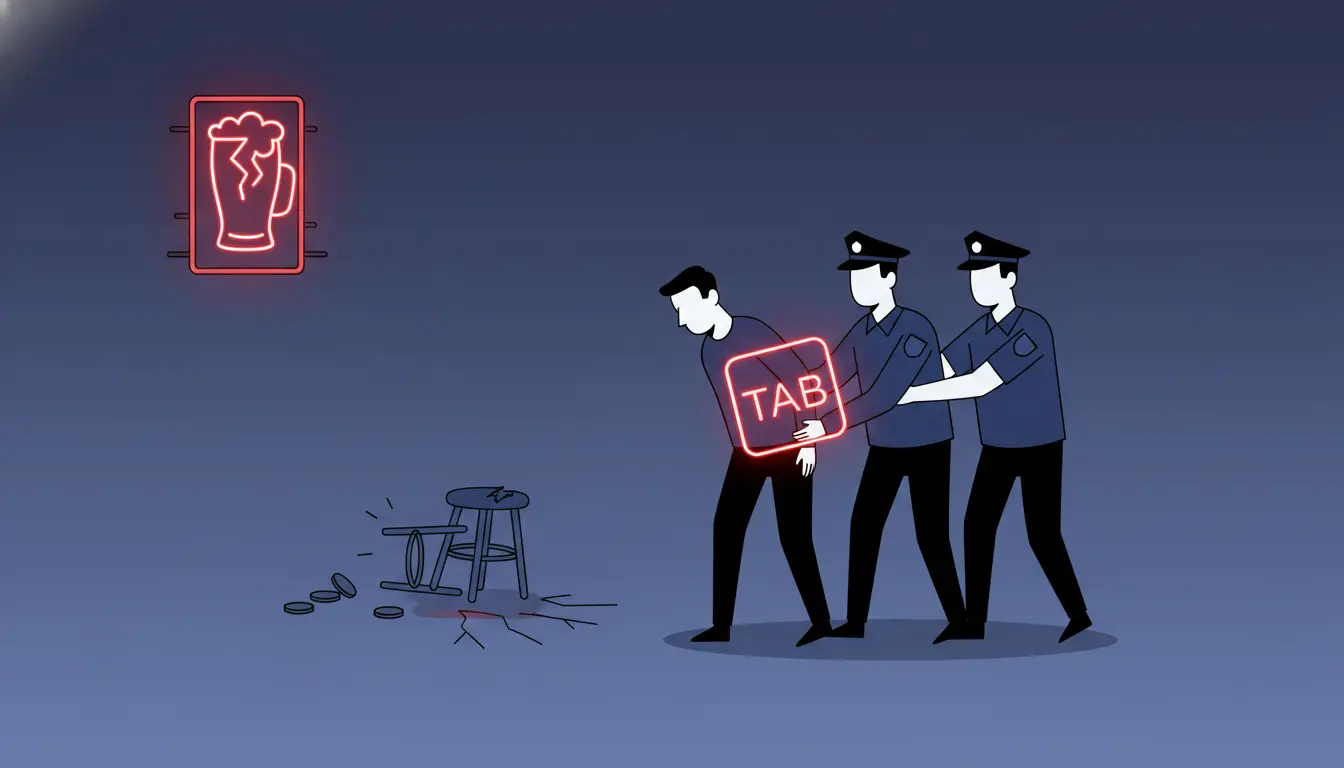
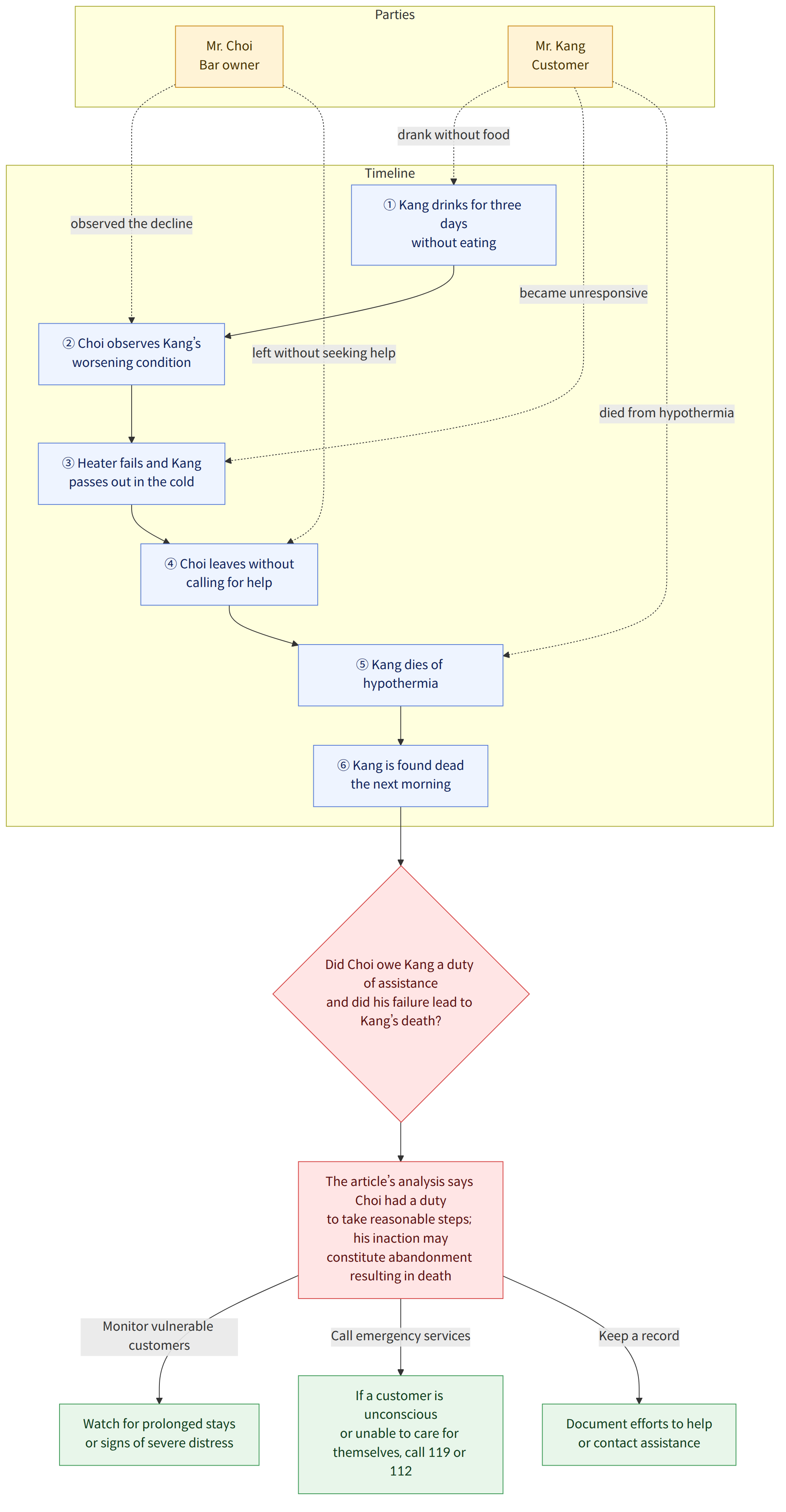
Mr. Choi, the owner of a quiet neighborhood bar called "Midnight Rest," was feeling a mix of concern and annoyance toward his regular, Mr. Kang. For three straight days, Mr. Kang, devastated by a recent job loss, had been sitting in the same corner booth, ordering bottle after bottle of soju. He hadn't touched a single bite of food, and his face had grown disturbingly pale.
On a bitterly cold winter night, the bar’s old heater began to fail, and the indoor temperature plummeted. Mr. Kang had finally passed out on a vinyl sofa, his body cold to the touch and unresponsive. Thinking Mr. Kang would simply "sleep it off," Mr. Choi locked up the bar and went home for the night without calling for help. The next morning, Mr. Kang was found dead, a victim of hypothermia. Can Mr. Choi be held criminally responsible for simply letting a customer drink?
2. The Legal Question: Does an Owner Have a Duty to Save?
The core of this case lies in whether the "contractual relationship" between a bar owner and a customer extends beyond serving drinks to protecting the customer’s life. Was Mr. Choi legally obligated to intervene when Mr. Kang's health took a turn for the worse?
3. What Korean Law Says: The Crime of Abandonment
The Korean Criminal Act addresses the failure to help those in need under the statutes of "Abandonment."
Criminal Act Article 271 (Abandonment): A person who abandons another who is in need of assistance due to old age, infancy, illness, or other circumstances, and whom they have a legal or contractual duty to protect, shall be punished by imprisonment for not more than three years or a fine.
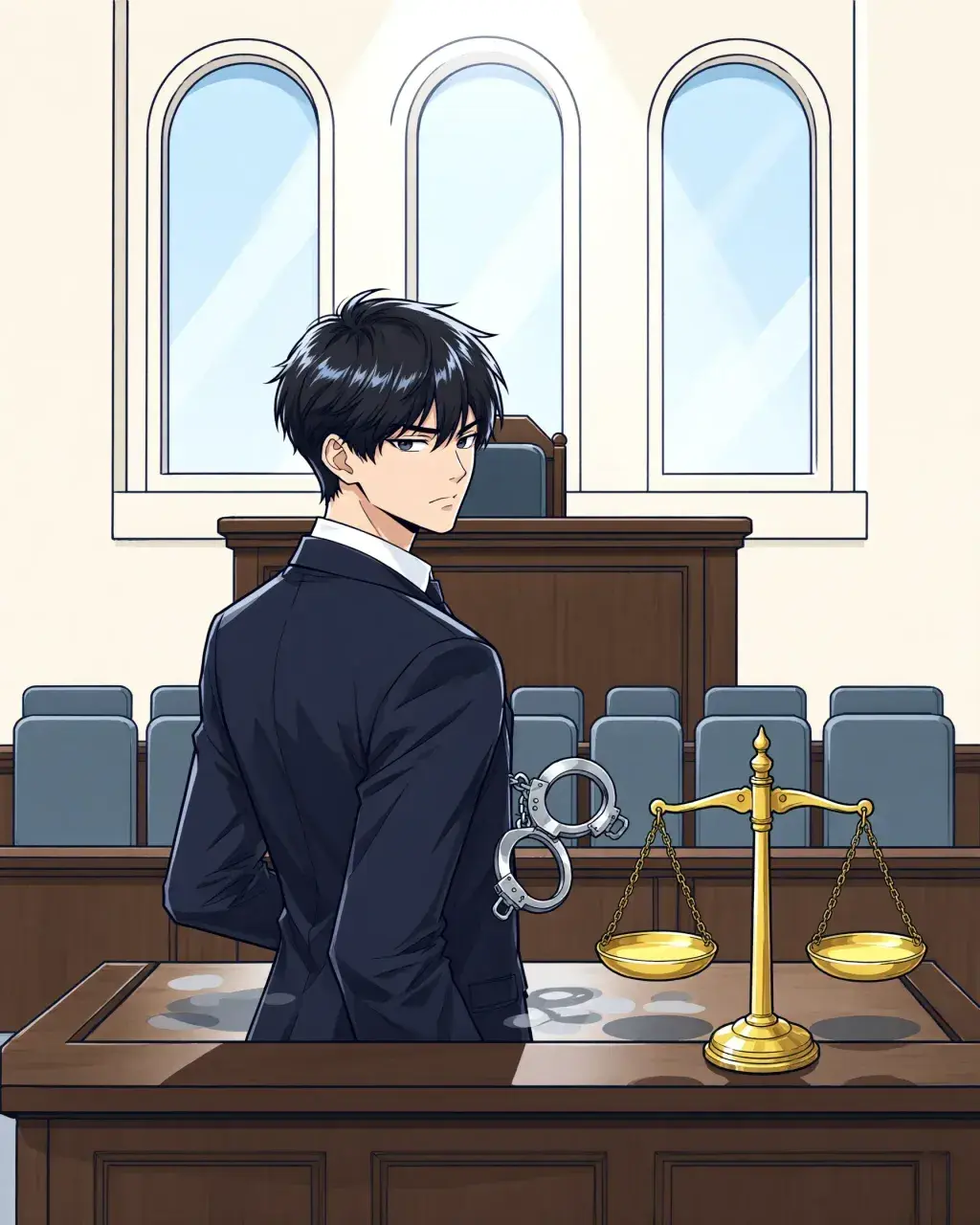
If such abandonment leads to the victim's death, the charge escalates to Abandonment Resulting in Death (유기치사죄), which carries significantly harsher penalties. Crucially, the "contractual duty" mentioned here isn't limited to doctors or caregivers; it can include the incidental duty of care that arises in a business relationship to ensure the safety of a client.
4. How Korean Courts Approach This
The Supreme Court of Korea has established a clear precedent for such tragic scenarios. The court maintains that a business owner is more than just a vendor; they have a responsibility to ensure that no harm comes to a customer within their sphere of influence.
- Physical Control: A customer inside a bar is considered to be under the owner's "control."
- Recognition of Danger: If the owner notices a customer has been drinking excessively without food for days, they are deemed to have recognized a life-threatening risk.
- Incidental Duty: Even if not explicitly written in a contract, there is an inherent duty to take reasonable steps—like calling the police or an ambulance—to prevent a customer's death.
5. Applying the Law to Mr. Choi
In our story, Mr. Choi clearly observed Mr. Kang’s deteriorating condition over three days. He knew the customer was malnourished, severely intoxicated, and that the room was dangerously cold. By choosing to go home and leave an unconscious man in a freezing environment, Mr. Choi violated his contractual duty of assistance.
Under Korean law, the owner should have moved Mr. Kang to a warm room, contacted his family, or alerted the authorities. Because Mr. Choi did none of these, his inaction is legally classified as abandonment. Since this neglect directly led to Mr. Kang's death, Mr. Choi faces the heavy weight of a criminal conviction for abandonment resulting in death.
6. Conclusion: What Happened, and What Should You Do?
Mr. Choi’s silence turned a tragic situation into a criminal act. He will likely face a prison sentence, as the law does not accept "he chose to drink" as a valid defense when an owner ignores a clear and present danger to life within their establishment.
For those running a business or finding themselves in a similar situation, here are three practical tips:
- Monitor Vulnerable Customers: Pay close attention to anyone who stays for an extended period or shows signs of extreme physical distress.
- When in Doubt, Call 119/112: If a customer loses consciousness or cannot care for themselves, do not assume they will be fine. Contact emergency services immediately to discharge your legal duty of care.
- Document Your Actions: If you have attempted to help or call for assistance, keep a record. In the eyes of the law, taking even a small, reasonable action can be the difference between a tragic accident and a criminal charge.