
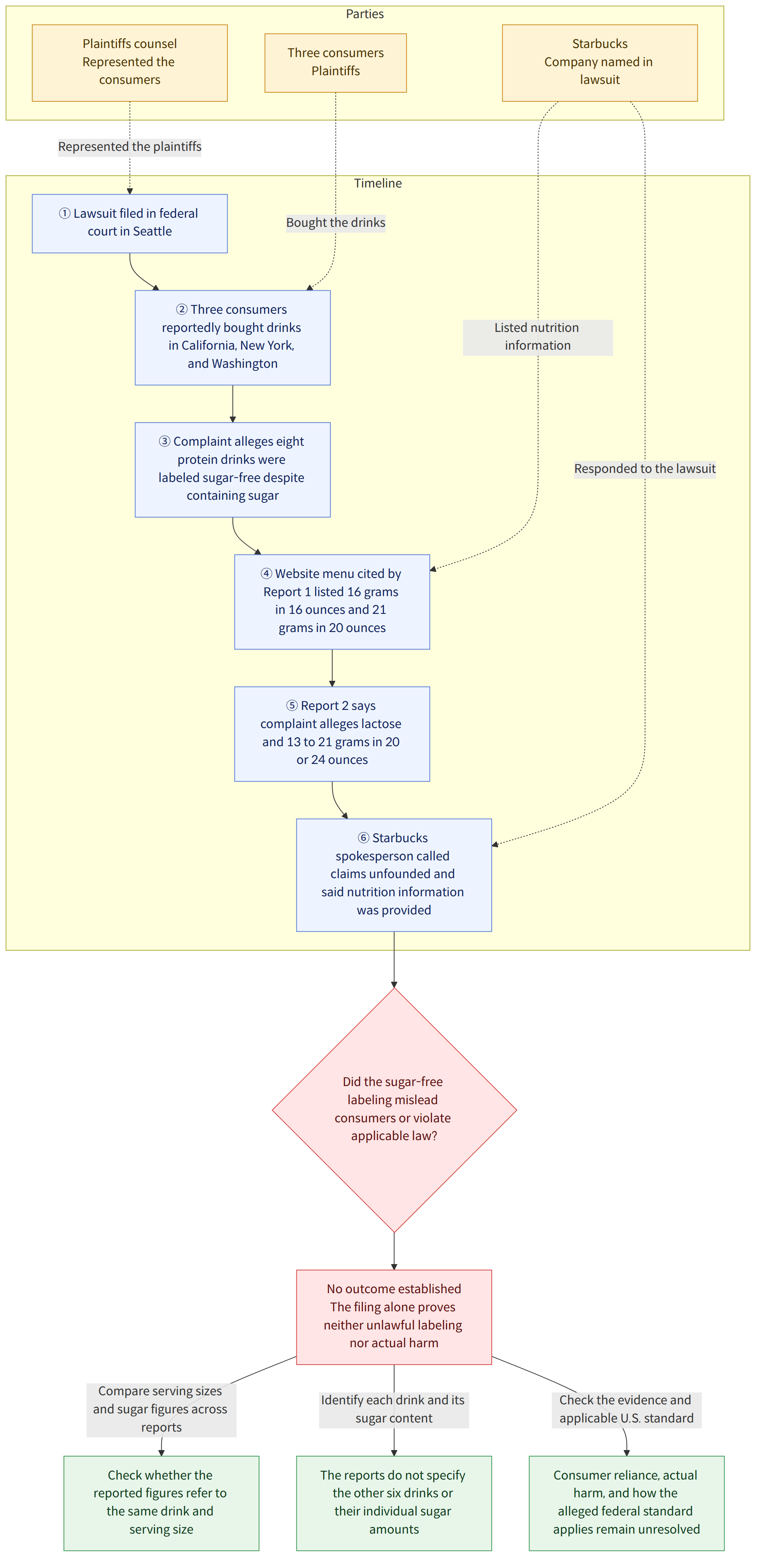
Starbucks is facing a consumer lawsuit alleging that eight protein drinks it sells in the United States were labeled ‘sugar-free’ even though they contain sugar. Filed in federal court in Seattle, the lawsuit represents three consumers who bought the drinks in California, New York and Washington. The Starbucks U.S. website menu cited in the reports listed 16 grams of sugar in the 16-ounce Sugar-Free Caramel Protein Matcha and 21 grams in the 20-ounce version.
Background and context
The issue is not only that the drinks contain sugar, but also what consumers understand a ‘sugar-free’ label to mean. Report 2 says the lawsuit alleges that the drinks contain lactose, a naturally occurring sugar in milk. The same report says the complaint alleges that 20- or 24-ounce drinks contain 13 to 21 grams of sugar.
Steve Berman, co-founder of Hagens Berman, a law firm that specializes in class actions and represents the plaintiffs, said people avoid sugar for various reasons, including general health, diabetes and blood sugar levels, making the labeling issue important to consumers. However, this is the explanation offered by the plaintiffs’ counsel. Whether the labeling was legally improper or consumers suffered harm are issues the lawsuit will address.
What this news means
A ‘sugar-free’ label can influence consumers’ choices. In particular, people trying to reduce their sugar intake may rely on menu labeling when making a selection. If a label and the nutrition information are understood to say different things, this could affect consumers’ decisions and health management. That said, the filing of this lawsuit alone does not establish that the labeling was unlawful or that actual harm occurred.
For example, a consumer trying to avoid sugar might choose a drink based on the menu’s ‘sugar-free’ label, then see the sugar content in the nutrition information and wonder whether it is safe to rely on the label when choosing a drink. This is a hypothetical example of a possible consumer experience; the reports do not provide all the details about why each plaintiff made a purchase or what specific harm they suffered.
Related rules and support information
The Internal Legal Guide (사내 법률 가이드, L2) explains that, when determining whether advertising is false or exaggerated, the usual standard is the overall and ultimate impression the advertisement makes on a reasonably attentive consumer. It says that relevant issues may include whether the advertisement differs from reality or could mislead consumers, as well as the causal connection between the advertisement and any actual harm, and who has the right to bring a claim.
This guide provides general information about consumer harm in South Korea. It does not explain the legal standards or outcome of this lawsuit in the United States. Report 2 says the complaint alleges that U.S. federal law prohibits describing a drink as ‘sugar-free’ if it contains more than 0.5 grams of sugar per 12 ounces, but this was reported as an allegation by the plaintiffs. Based on the information currently available, it is not possible to determine how that standard applies to this case.
Points reported differently
The two reports give different figures for the drinks’ sugar content. Report 1 cited the Starbucks U.S. website menu on Monday, which listed 16 grams in the 16-ounce drink and 21 grams in the 20-ounce drink. Report 2 said the complaint alleges that 20- or 24-ounce drinks contain 13 to 21 grams. It is difficult to conclude that the serving sizes and sugar amounts in the two reports refer to identical labeling for the same product.
The reports also differ on Starbucks’ response. Report 1 does not include a company response, while Report 2 says a Starbucks spokesperson wrote in an email that the lawsuit’s claims were unfounded and that the company has consistently provided information about its drinks and their nutrition. It therefore cannot be concluded that the company gave no response.
What is confirmed and what remains unknown
Confirmed facts
- A consumer lawsuit has been filed alleging a mismatch between the ‘sugar-free’ label and the actual sugar content of eight Starbucks protein drinks in the United States.
- The lawsuit was filed on behalf of three consumers who, according to reports, bought the drinks in California, New York and Washington.
- The Monday website menu cited by Report 1 listed 16 grams of sugar in the 16-ounce drink and 21 grams in the 20-ounce drink.
- Report 2 reported the plaintiffs’ claims concerning lactose and U.S. federal law, as well as a rebuttal from a Starbucks spokesperson.
What remains unknown
- The reports do not specify the names or individual sugar content of the other six drinks.
- It has not been established whether the labeling violates applicable laws or whether consumers suffered harm.
- The lawsuit’s next steps and outcome are not yet known.
What readers can check
- When choosing a drink, consumers can check the nutrition information for the specific product and serving size, not just the words ‘sugar-free.’
- This is general information, and specific evidentiary requirements may vary depending on the case and the applicable law.
- Because this case is being litigated in the United States, rights or filing deadlines cannot be determined solely on the basis of South Korea’s legal guide. Since the reports do not provide filing deadlines or procedures, anyone seeking to establish specific rights should separately check the laws and procedures that apply to the case.
References
- Guide to Claims for Compensation for Consumer Harm
- Other coverage consulted: koreatimes.co.kr