1. A Human Story
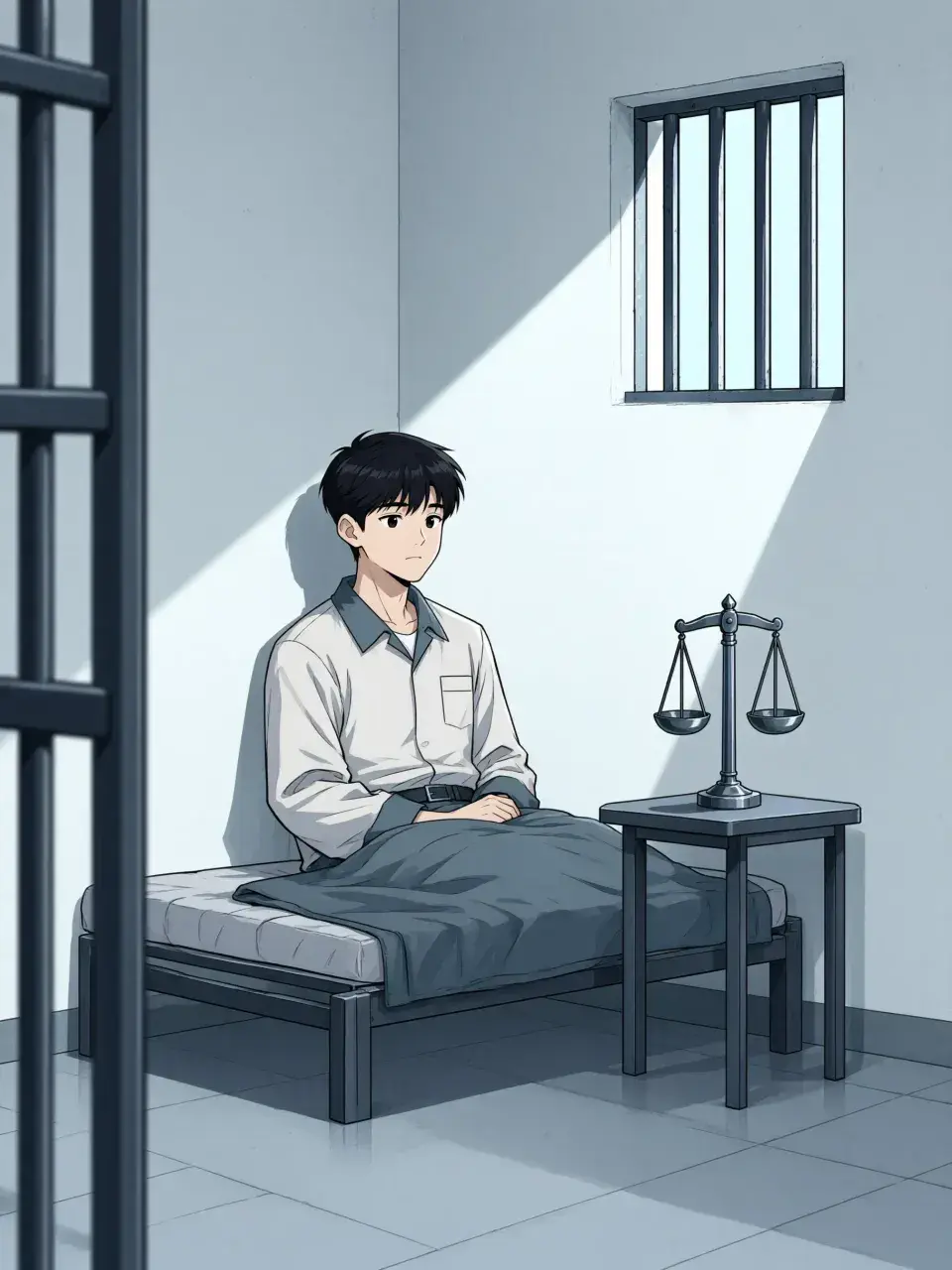
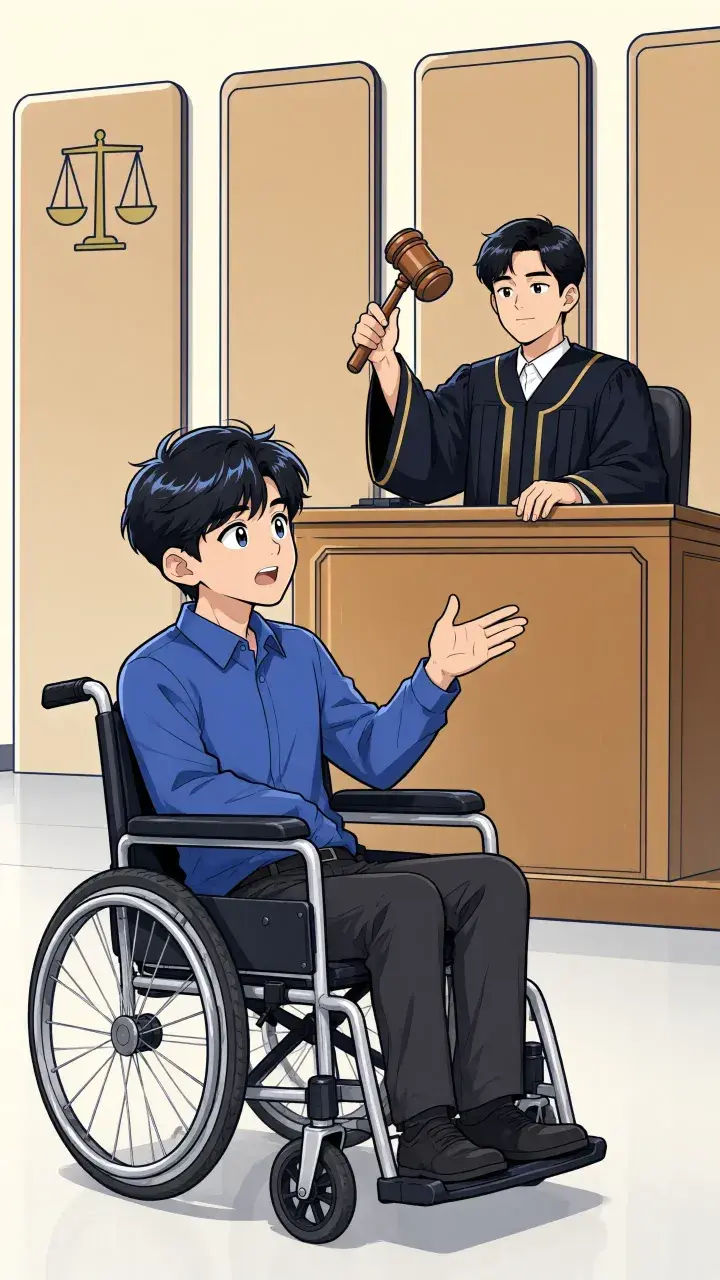
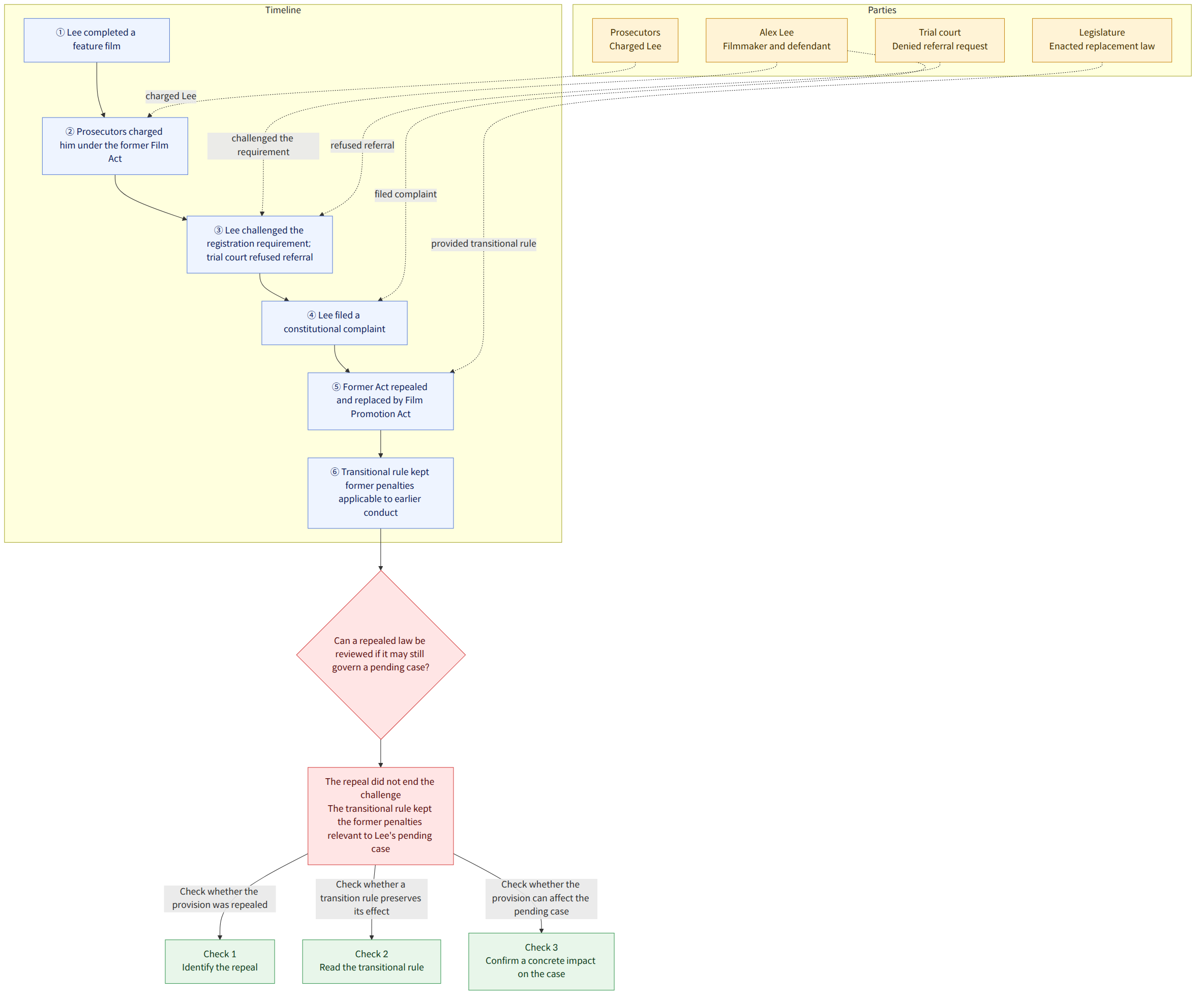
Alex Lee had spent years trying to get a feature film made. When he finally completed one, he believed the hardest part was behind him. Instead, prosecutors charged him with violating the former Film Act: they alleged that he had produced a feature film without registering as a film producer with the government.
As his criminal trial continued, Alex challenged the constitutionality of the old Act’s registration requirement. The trial court refused to ask the Constitutional Court to review it, so Alex filed a constitutional complaint. Then, while that complaint was pending, the old Film Act was repealed and replaced by the Film Promotion Act. It seemed, at first, as though the legal ground beneath his challenge had disappeared.
But the replacement Act included a transitional rule: conduct that violated the former Film Act before the new law took effect would still be dealt with under the former Act’s penalty provisions. Alex’s alleged conduct had taken place before repeal. The question was therefore whether the old rule was truly gone from his case—or still capable of determining its outcome.
2. The Legal Question
Can someone seek constitutional review of a law that has been repealed, when a transitional provision means that the old law may still apply to the person’s pending criminal case?
3. What Korean Law Says
The general rule is that constitutional review concerns a law that remains in force when the Constitutional Court considers the challenge. A court ordinarily does not review a repealed provision as an abstract historical question.
The central exception: A repealed provision may still be reviewed if it remains applicable to the case before the court and the decision on its constitutionality can affect the judgment in that case.
In practical terms, the question is whether the old law still has legal work to do—not simply whether it once existed. Several points matter:
- Was the provision repealed? Repeal ordinarily removes the law from future application, but does not necessarily erase its effect on earlier conduct.
- Does a transitional rule preserve its application? A new law may direct that conduct predating its commencement continues to be assessed under the former law, including its penalties.
- Is there a live case in which the old provision matters? The provision must be relevant to deciding the person’s actual dispute, such as a pending prosecution.
- Could constitutional review affect the result? If the challenged provision is legally decisive, its validity may be a necessary premise of the judgment.
Korean procedure also allows a person whose request for a court to refer a statute for constitutional review has been denied to bring a constitutional complaint under the Constitutional Court Act. That route does not guarantee success on the constitutional merits; it gives the Constitutional Court an opportunity to consider the challenge where the procedural requirements are met.
4. How Korean Courts Approach This
Korean courts distinguish between a law that has merely been repealed and one that has ceased to matter in a particular case. Repeal is important, but it is not always conclusive. The court examines whether the challenged provision continues to govern the dispute because of a transitional provision or another rule preserving its effect.
A constitutional challenge is not moot merely because the statute has been repealed if the statute still supplies the rule that the court must apply to the pending case.
The requirement is a concrete connection to the litigation. A person cannot generally ask the Constitutional Court to rule on a repealed provision just because they disagree with it or believe it could affect others. But where a prosecution remains pending and the former law continues to govern the alleged pre-repeal conduct, the provision may remain a necessary part of the court’s decision.
5. Applying the Law to the Case
Alex’s situation meets that standard step by step.
- The challenged provision was repealed. The former Film Act no longer operated as the general law for future conduct after the Film Promotion Act took effect. That would normally weigh against reviewing it as a current statute.
- The alleged violation occurred before repeal. Alex was accused of producing a feature film without the registration required by the former Act. The prosecution concerned conduct from the period when that Act was in force.
- The new Act preserved the old penalties for earlier conduct. Its transitional provision directed that penalties for conduct violating the former Film Act before the new Act commenced would be determined under the former Act. The repeal therefore did not remove the old law from Alex’s prosecution.
- The old requirement could affect the criminal judgment. Alex’s charge depended on the former Act’s registration rule. If the challenged provision were found unconstitutional, that could affect the legal basis for the prosecution. Its validity was therefore not an abstract matter; it was connected to the outcome of his trial.
- The Constitutional Court could consider the complaint. Because the provision remained applicable to Alex’s pending case, its repeal did not by itself make his constitutional challenge inadmissible. He could ask the Constitutional Court to review it.
That conclusion concerns the Court’s authority to hear the challenge, not whether the registration requirement was in fact unconstitutional. Nor does it automatically acquit Alex. The constitutional issue must be decided, and the criminal proceedings must then be resolved in light of that decision and the applicable law.
6. Conclusion: What Happened, and What Should You Do?
Alex’s challenge was not barred simply because the Film Act had been repealed. The transitional provision kept the former Act’s penalties relevant to his alleged pre-repeal conduct, and the registration requirement remained part of the legal basis for his pending prosecution. The Constitutional Court could therefore review the provision. Alex had opened the door to constitutional review—but the door was not the same thing as a verdict in his favor.
If you face a similar situation, keep three practical points in mind:
- Check the transitional provisions. When a law is repealed or replaced, read the rules governing conduct that occurred before the change.
- Show the connection to your case. Identify how the old provision remains applicable and how its validity could affect the court’s decision.
- Act through the proper procedure. If a court refuses a request to refer a statute for constitutional review, ask a Korean lawyer promptly about the deadlines and requirements for a constitutional complaint.