The Red Mailbox: Jin-woo Choi’s Fatal Mistake
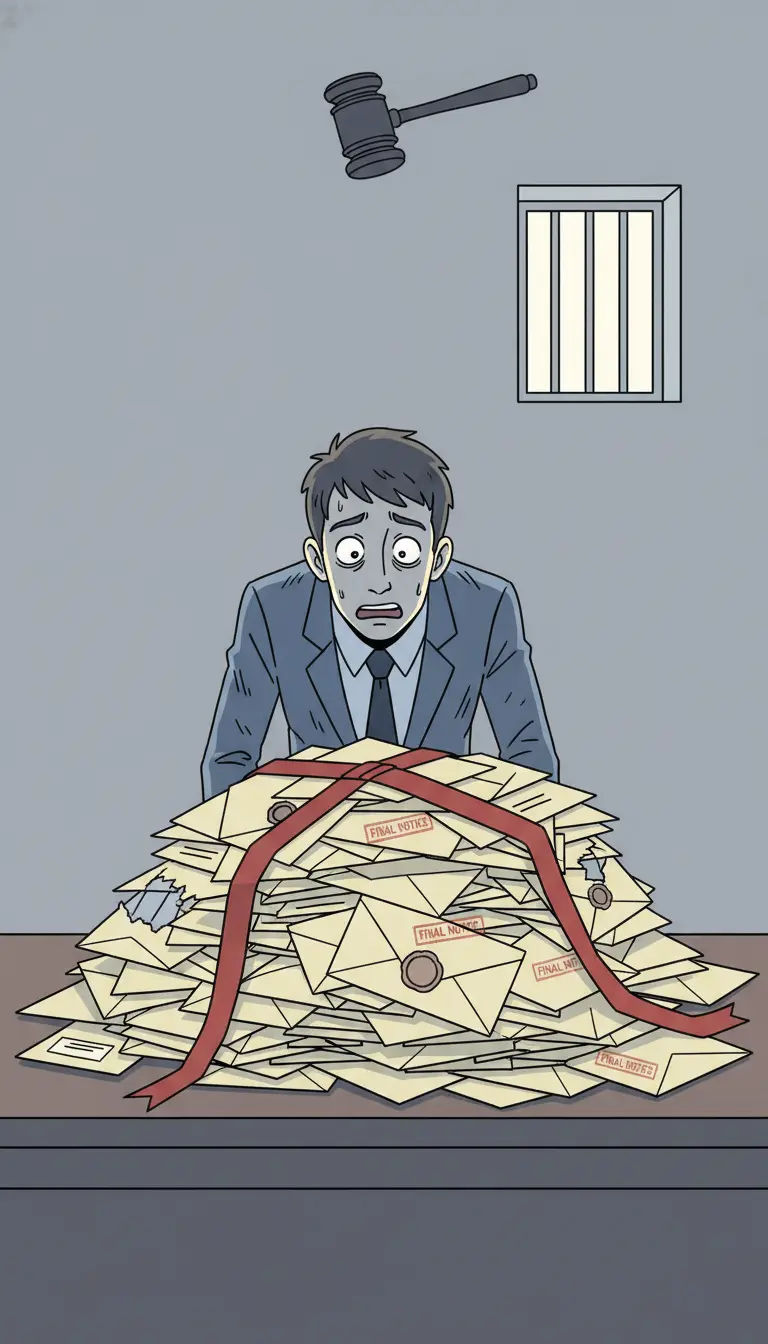
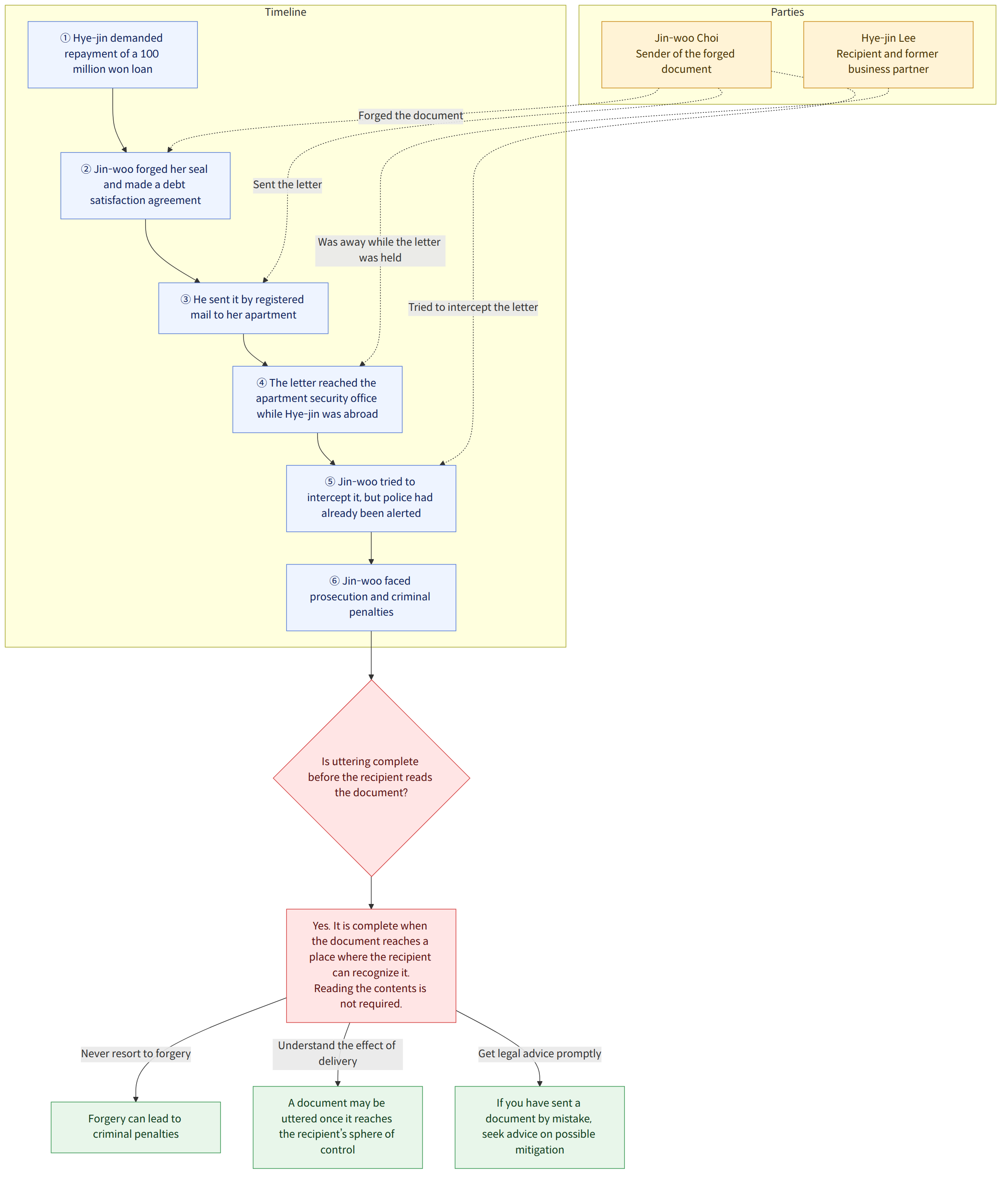
Jin-woo Choi, a small business owner, was drowning in debt. When his former business partner, Hye-jin Lee, demanded the repayment of a 100 million won loan, Jin-woo felt cornered. In a moment of desperation, he did the unthinkable: he forged Hye-jin’s personal seal and created a fake 'Debt Satisfaction Agreement' stating that his debt had been paid in full.
Jin-woo sent this forged document to Hye-jin’s apartment via registered mail. His plan was to "send it first and try to talk her into it later." However, Hye-jin happened to be on a week-long vacation abroad, and the letter sat unopened in her apartment's security office. Before she could return, Jin-woo, struck by a sudden pang of guilt, tried to intercept the mail. But it was too late—the police had already been alerted by another party. Jin-woo protested, "She hasn't even opened the envelope! How can I be guilty of a crime she didn't even see?"
The Legal Question: When is 'Uttering' Complete?
The core issue in this case is whether the Crime of Uttering a Forged Private Document is established if the forged document is delivered but the recipient fails to actually read its contents.
What Korean Law Says
The Korean Criminal Act strictly punishes those who use forged or falsified documents to deceive others.
Article 225 & 231 of the Criminal Act state that any person who utters a forged or falsified document, drawing, or electronic record shall be punished by the penalty prescribed for the crime of forgery.
In legal terms, 'uttering' (행사) refers to using a forged document as if it were genuine. This can happen through various means:
- Presenting the document to someone in person.
- Sending the document through the mail or digital means.
- Placing the document in a location where it is accessible for inspection.
- Crucially, the recipient does not need to be successfully deceived for the crime to exist.
How Korean Courts Approach This
The Supreme Court of Korea has established a very clear standard regarding the timing of when this crime is 'consummated' (legally completed).
"The uttering of a forged private document is consummated by placing the forged document in a state where the recipient can recognize it; it is not required that the recipient actually perceives its contents."
This means that if a forged document is sent by mail, the crime is fully completed the moment the document reaches the recipient’s sphere of control—such as their mailbox or their office—where they could potentially read it.
Applying the Law: The Case of Jin-woo Choi
Applying this principle to Jin-woo Choi’s situation, the outcome is clear. The forged document reached Hye-jin’s apartment complex and was held by the security office. Even though Hye-jin was in another country and had no idea the letter existed, the document was legally in a 'state where she could recognize it.'
Therefore, Jin-woo is not just guilty of an 'attempted' crime; he is liable for the consummated crime of uttering a forged private document. The fact that the envelope remained sealed does not shield him from criminal liability.
Conclusion: What Happened, and What Should You Do?
Ultimately, Jin-woo Choi faced prosecution and criminal penalties. Many people mistakenly believe that they can 'undo' a crime if they act before the victim notices. However, the law draws a firm line at the moment of delivery.
If you find yourself in a complicated legal or financial dispute, keep these tips in mind:
- Never resort to forgery. The crime of uttering forged documents is a serious felony that can lead to imprisonment. The legal system views the integrity of documents as a cornerstone of social trust.
- Understand the weight of 'Delivery.' In the eyes of the law, once a document is delivered, it is often considered 'served' or 'uttered.' This applies to everything from criminal acts to civil notices.
If you have already sent a document and realized it was a mistake, do not wait. Contact a legal professional immediately to discuss potential mitigation strategies, such as voluntary surrender or early settlement, before the situation escalates.
This column is provided for informational purposes only and does not constitute legal advice. Please consult with a legal expert for specific cases.