1. A Human Story
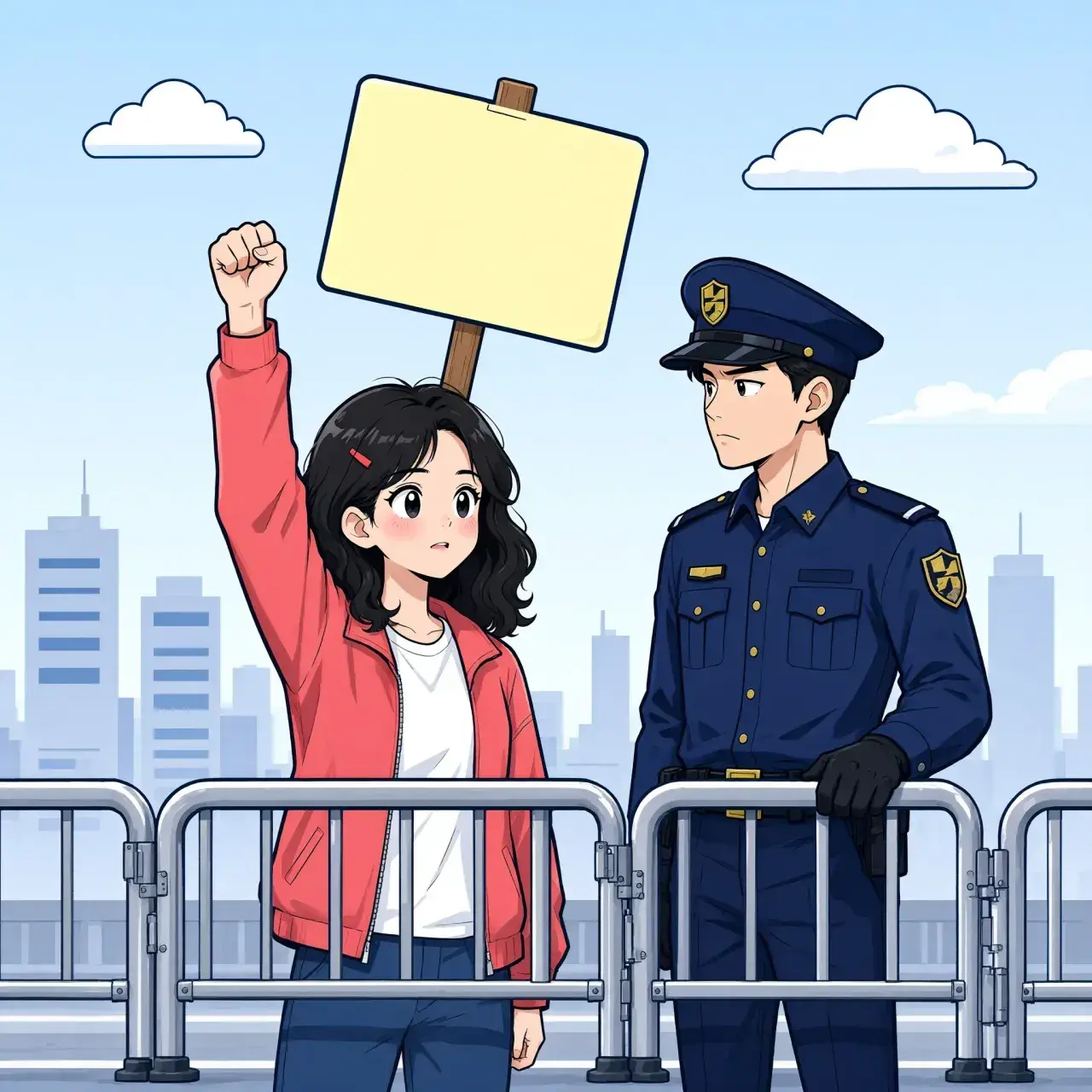
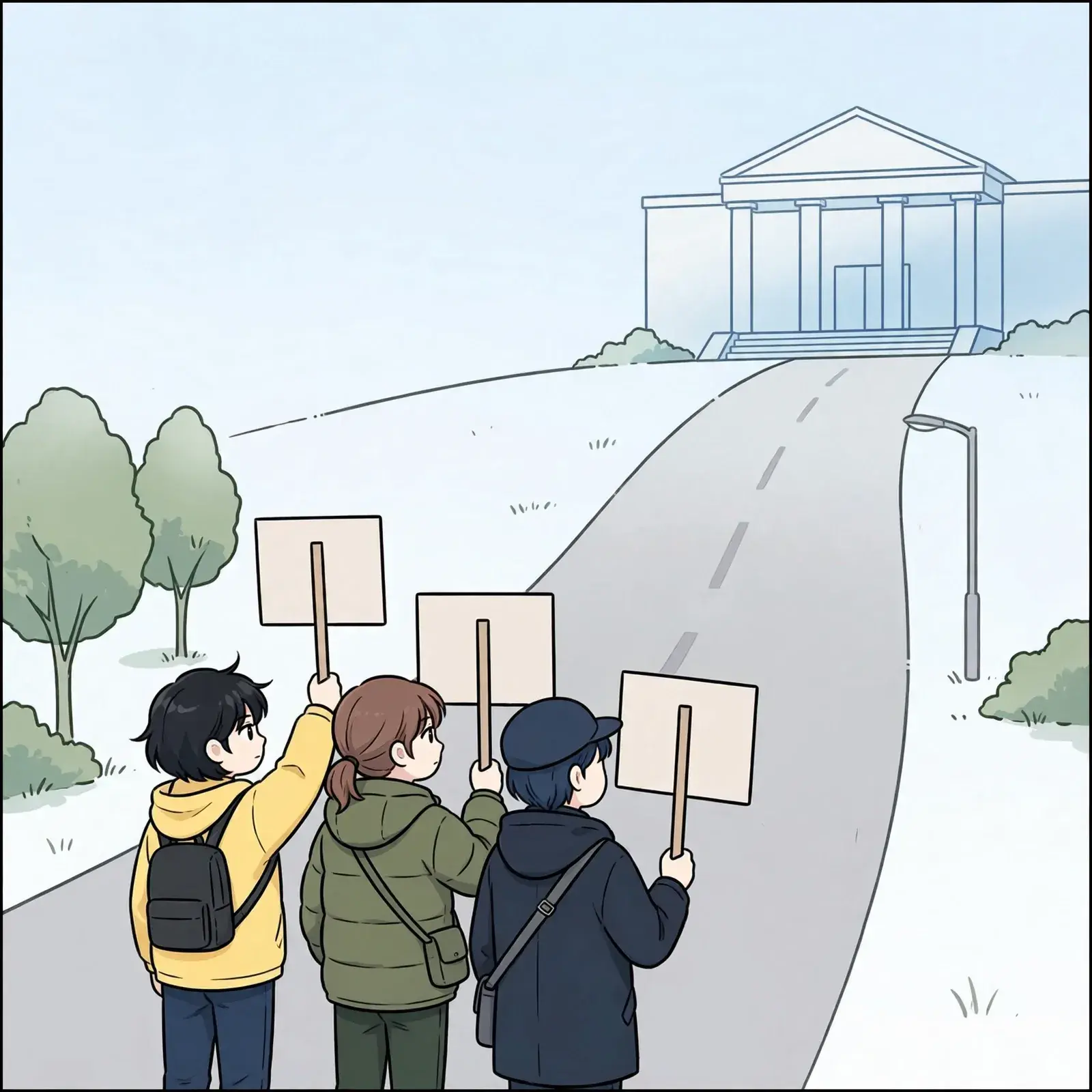
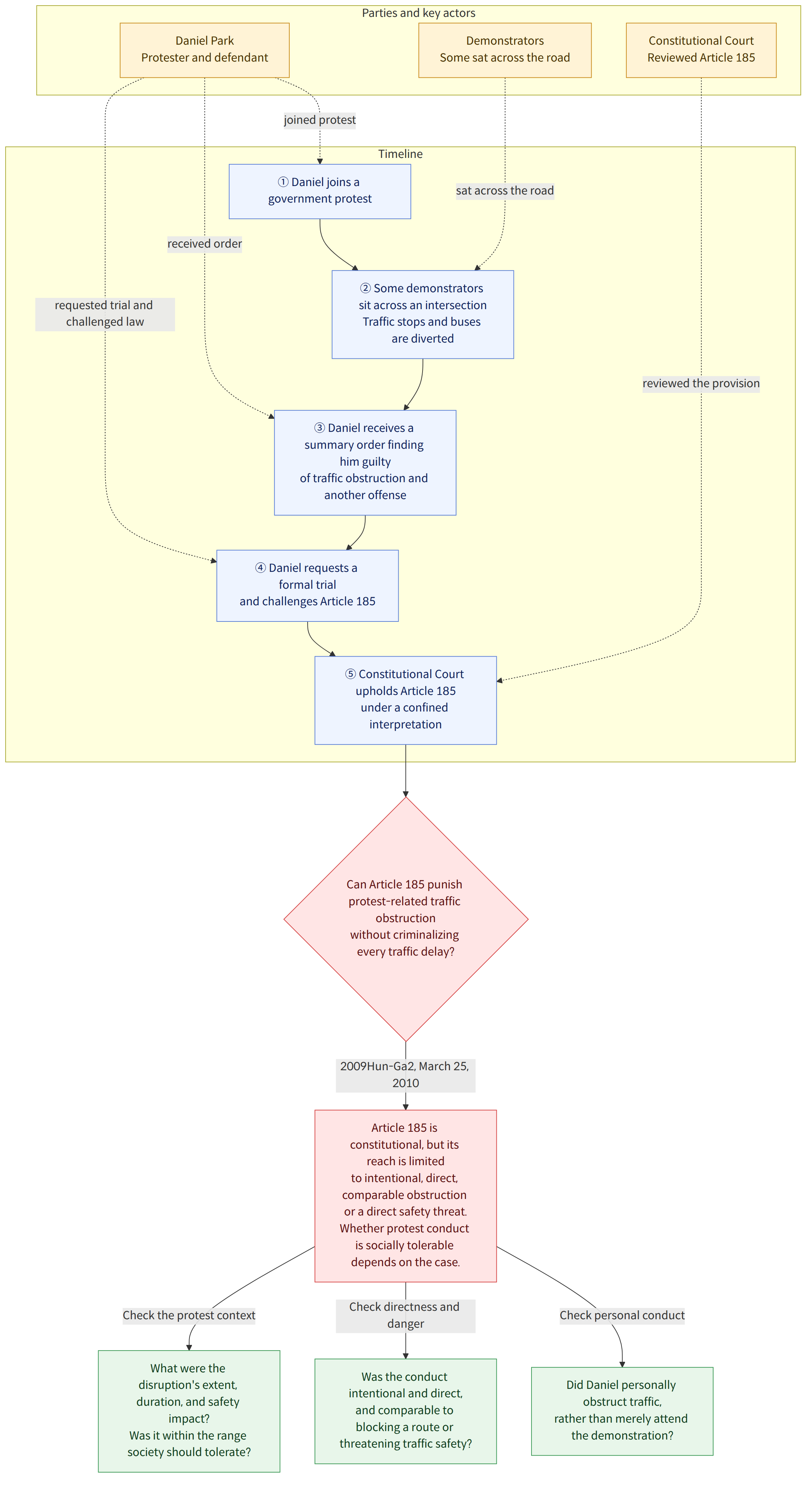
When Daniel Park joined a demonstration criticizing the government, he expected a long afternoon of speeches, banners, and chants—not a criminal case. As the crowd moved toward a busy intersection, some demonstrators sat across the road. Cars stopped, buses were diverted, and the protest became a standoff between the demonstrators and the police.
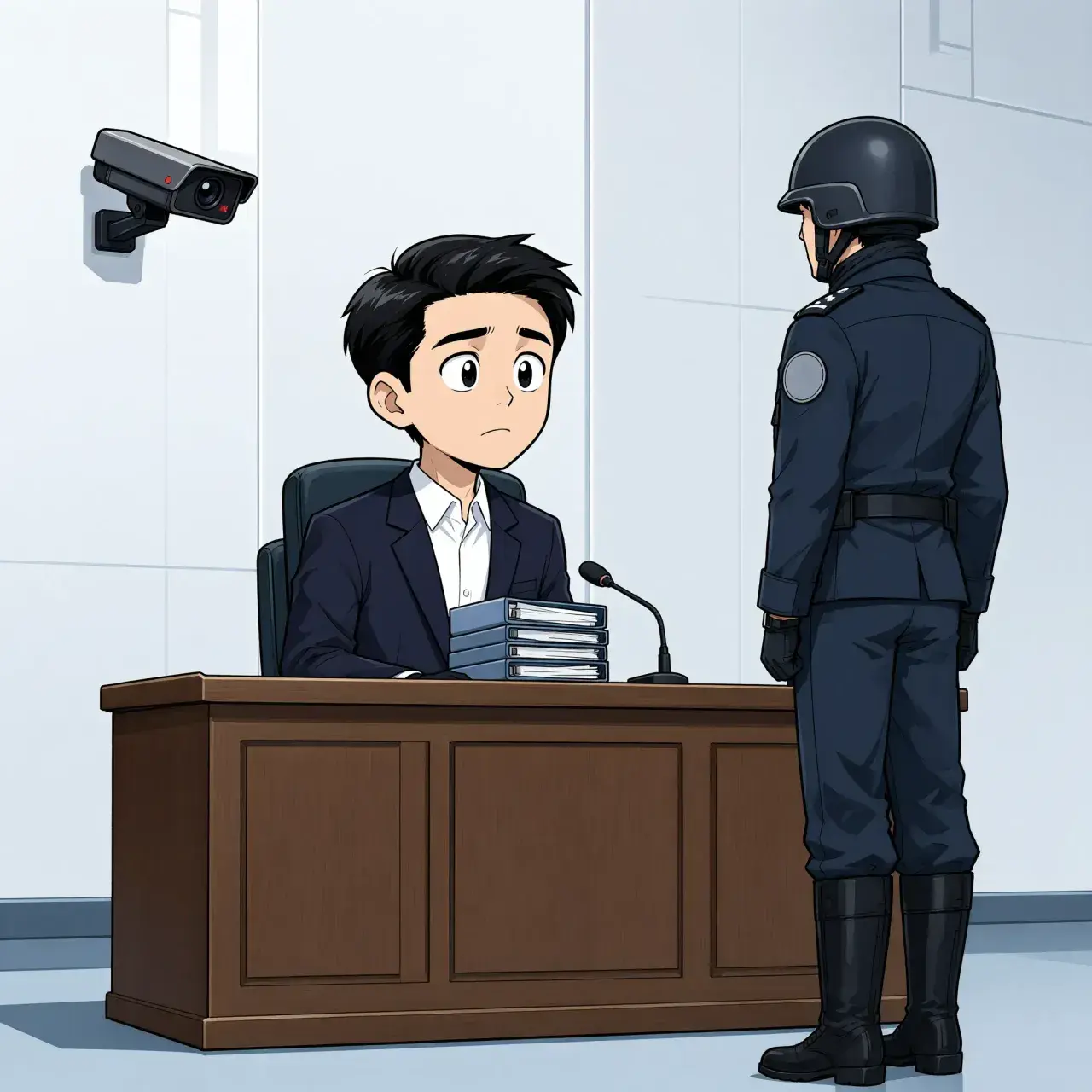
Months later, Daniel received a summary order finding him guilty of general traffic obstruction, along with another offense. He asked for a formal trial. His concern was not only whether he had personally obstructed the road. He also believed the law itself was too vague and could be used to punish people for exercising the right to protest. In court, he challenged the constitutionality of the provision.
2. The Legal Question
Can South Korea punish a protester under the general traffic-obstruction offense when the statute includes the broad phrase “otherwise obstructs traffic”? And does that wording violate the Constitution by failing to tell people clearly what is forbidden or by unduly restricting freedom of assembly?
3. What Korean Law Says
Article 185 of the Korean Criminal Act addresses obstruction of public routes. In substance, it provides:
A person who damages or makes impassable a road, waterway, or bridge, or otherwise obstructs traffic, is subject to criminal punishment.
The constitutional issue turns partly on the phrase “otherwise obstructs traffic.” In a decision issued on March 25, 2010 (2009Hun-Ga2), the Constitutional Court upheld Article 185. It concluded that the provision did not violate the constitutional principles of clarity, proportionality between responsibility and punishment, or equality.
The Court did not read “otherwise” as an invitation to punish any inconvenience to motorists. It interpreted the phrase by reference to the conduct listed before it—damaging or making a route impassable. The relevant conduct must be comparable in seriousness and must intentionally and directly create a traffic obstacle or threaten traffic safety.
The constitutional protection of assembly also matters. A demonstration may inconvenience the public without becoming a crime. The question is whether the disruption remains within the range that society should tolerate in order to protect the right to assemble. If it does, the conduct may not be contrary to social norms and should not be criminally punished. That assessment is made in the particular case.
For a protest-related charge, the key points therefore include:
- What the defendant did: Mere presence at a demonstration is not the same as personally obstructing traffic.
- How direct and intentional the conduct was: The statutory phrase covers deliberate, direct obstruction or a direct threat to traffic safety—not every indirect or incidental effect.
- What happened on the road: The nature, extent, and duration of the disruption, and its effect on traffic safety, may matter.
- Whether the disruption must be tolerated: The right to assemble requires a case-specific assessment of whether the conduct crossed the line from protected protest into criminal obstruction.
4. How Korean Courts Approach This
Korean courts distinguish between a protest that affects traffic and conduct that meets the legal definition of traffic obstruction. The fact that vehicles were delayed is relevant, but it does not by itself answer the question. The court must examine the defendant’s actions and the actual nature of the obstruction.
The Constitutional Court’s approach is to interpret the statute in a confined way: “other methods” must be intentional and direct, and must produce an obstacle or safety threat comparable to the expressly listed acts. This limiting interpretation is central to why the Court considered the wording sufficiently clear rather than unconstitutionally vague.
Courts must also consider freedom of assembly when applying the law. The constitutional ruling did not declare that demonstrations are exempt from Article 185. Nor did it permit authorities to treat all road disruption as criminal. Whether a particular protest action falls within the socially tolerable scope of assembly is an issue of interpreting and applying the law to the facts—not, in the Court’s view, a reason to invalidate the statute itself.
5. Applying the Law to Daniel’s Case
Daniel’s constitutional argument raises a serious concern: a broadly worded offense could chill protest if people cannot tell what conduct may lead to prosecution. But under the Constitutional Court’s interpretation, Article 185 is not read to criminalize every protest that causes delay. Its reach is limited to deliberate and direct obstruction or a direct danger to traffic safety comparable to blocking or damaging a route.
The details of Daniel’s conduct would therefore matter. Suppose the evidence showed only that he attended the rally, listened to speeches, and walked with the crowd on a route being managed by the authorities. That would not, without more, establish that he personally committed the offense. Participation in a demonstration is not a substitute for proof of the statutory conduct.
In the fictional facts of Daniel’s case, however, the evidence is stronger. After the group reached the intersection, Daniel knowingly joined others in sitting across the road. The gathering blocked both lanes for an extended period, vehicles could not pass, and buses had to be diverted. The court also heard that the demonstrators continued to block the road after being told that traffic could not move through the intersection.
Those facts point toward an intentional and direct obstruction, rather than a brief or incidental inconvenience. The court would still need to weigh the circumstances of the protest and the importance of protecting assembly. But a deliberate, sustained blockade that prevents ordinary traffic from passing is less likely to fall within the disruption society must tolerate for the sake of a demonstration.
The constitutional challenge and the question of Daniel’s individual guilt are separate. The Constitutional Court’s 2010 ruling means that the argument that Article 185 is facially unconstitutional is unlikely to succeed. It does not, by itself, decide whether Daniel committed the offense. That requires a trial court to assess the evidence and apply the statute’s limiting interpretation to his conduct.
6. Conclusion: What Happened, and What Should You Do?
In this fictional case, Daniel’s challenge to the constitutionality of Article 185 fails. The provision has been upheld, and its “other methods” language is understood to cover intentional, direct obstruction comparable to physically blocking or damaging a route. Given the sustained, deliberate road blockade in the story, the trial court finds that Daniel’s conduct went beyond a traffic impact that society must tolerate as part of a protest and upholds his conviction.
That outcome does not mean that everyone present at a demonstration is criminally responsible, or that any delay caused by a protest is unlawful. The law requires attention to each person’s conduct, the directness and seriousness of the obstruction, and the protection owed to peaceful assembly.
If you face a similar situation:
- Preserve evidence of your own conduct. Keep photographs, video, messages, and witness details that show where you were and what you did; do not assume that attendance alone proves or disproves the charge.
- Take every court deadline seriously. If you receive a summary order, promptly ask a Korean criminal-defense lawyer about requesting a formal trial and the procedure for raising constitutional issues.
- Document the protest context. Record how long the route was blocked, whether traffic could still pass, what directions were given, and how the demonstration was managed. Those facts may be important to both criminal liability and the constitutional protection of assembly.