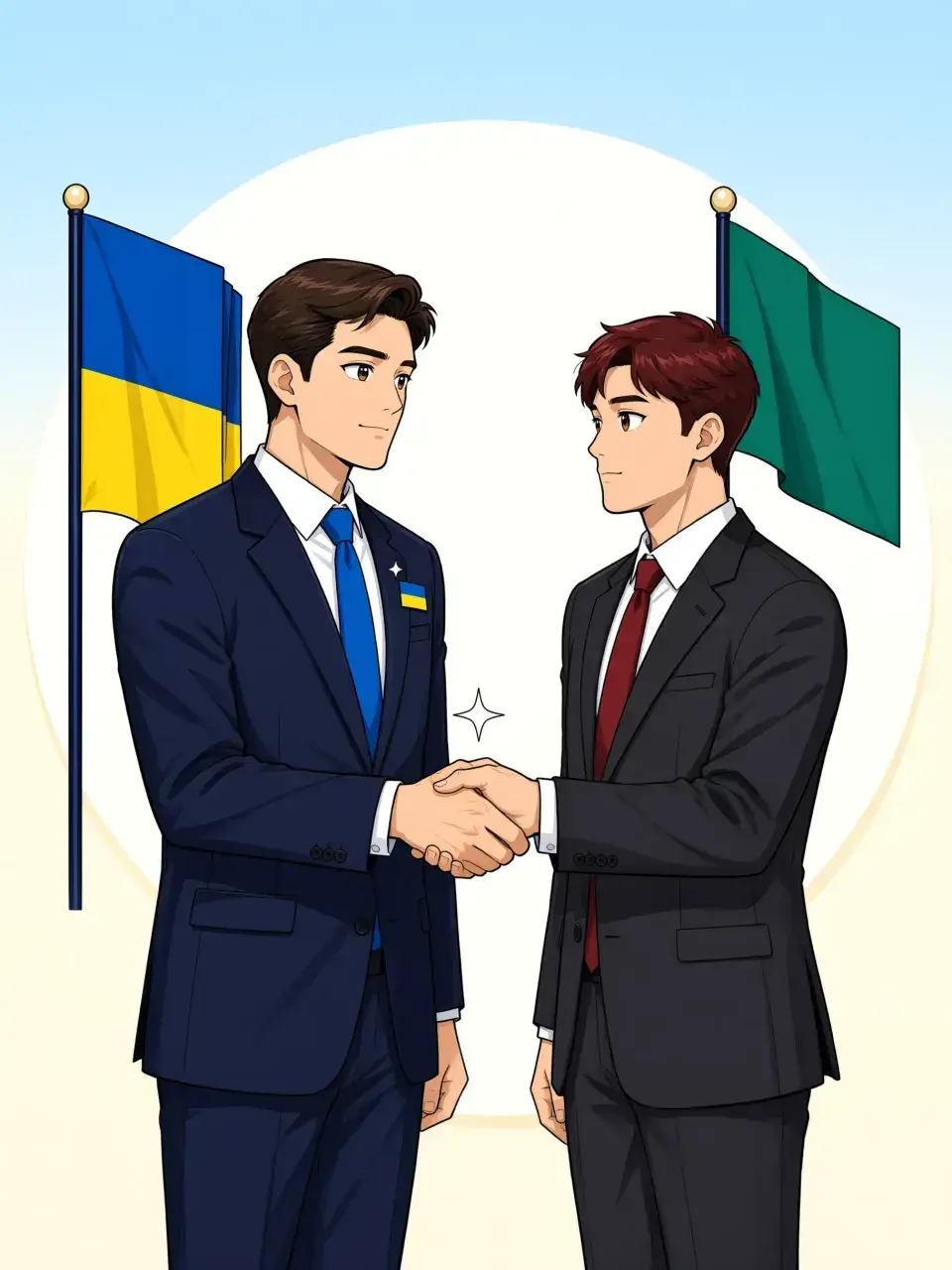
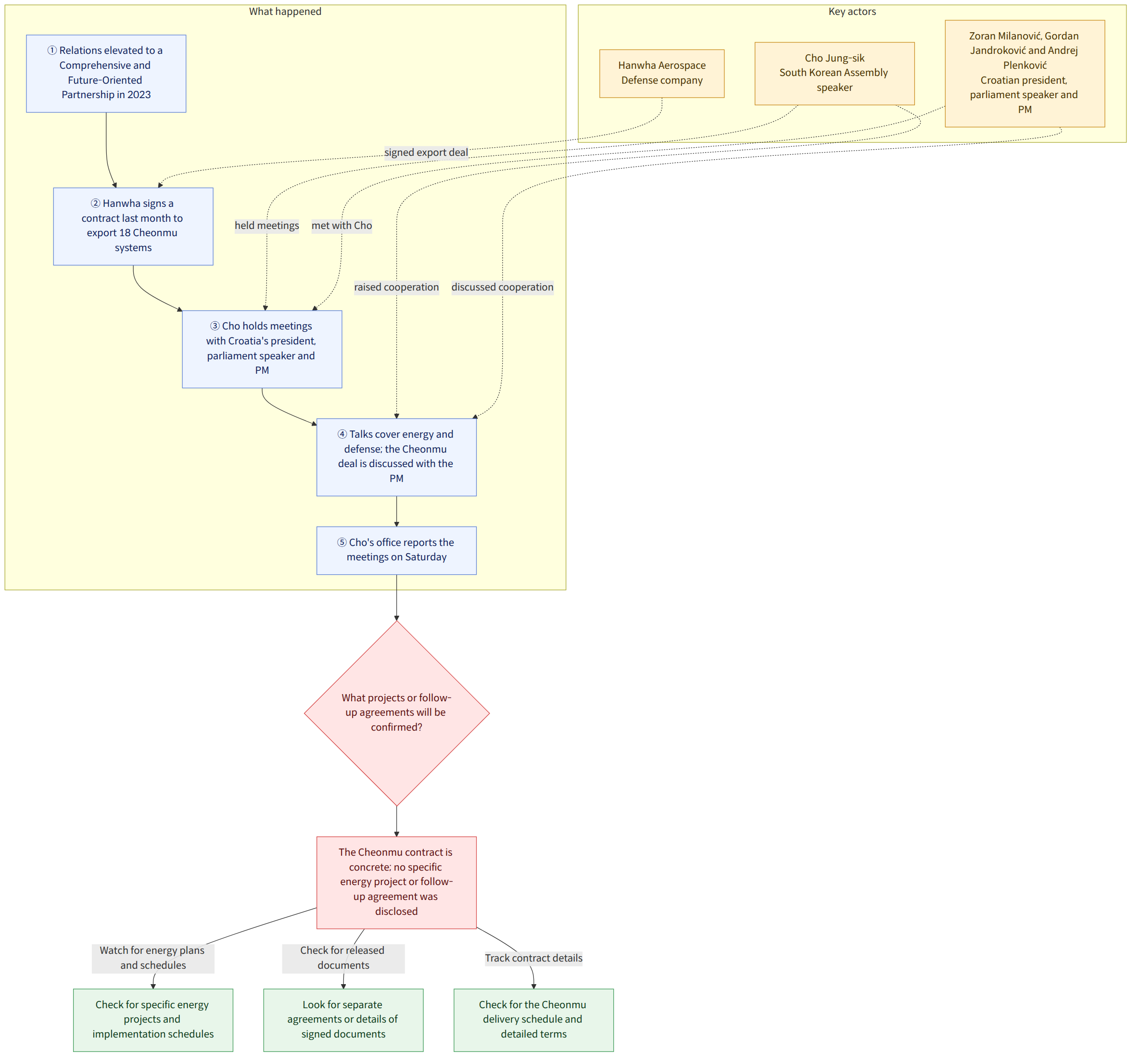
National Assembly Speaker (국회의장) Cho Jung-sik held a series of meetings in Croatia with President Zoran Milanović, Parliament Speaker Gordan Jandroković and Prime Minister Andrej Plenković to discuss energy and defense cooperation between the two countries. Cho’s office reported the meetings on Saturday. Cho met President Milanović in Zagreb on Friday, local time, and said in a separate meeting with the prime minister that relations in the economic, cultural, defense and energy sectors should be strengthened.
The discussions were not limited to reaffirming diplomatic ties; they were also linked to an actual defense contract. Last month, South Korean defense company Hanwha Aerospace signed a contract to export 18 Cheonmu (천무) multiple rocket launch systems (weapons systems that fire multiple rockets) to Croatia. The contract is worth about 640 billion won ($477 million).
Background and context
South Korea and Croatia established diplomatic relations in 1992 and have maintained friendly, cooperative ties. Cho said their relationship was elevated to a Comprehensive and Future-Oriented Partnership (포괄적·미래지향적 동반자 관계) in 2023. This visit was an example of the two countries discussing areas of cooperation, including energy and defense, after that elevation.
Cho visited Croatia as part of a nine-day, four-country tour that also included Italy, Vatican City and Greece. In his meeting with the Croatian president, he reviewed the trajectory of bilateral relations; in his meeting with the prime minister, he raised the need for cooperation in the economic, cultural, defense and energy sectors. The fact that the recent weapons supply contract was mentioned in the meeting with the prime minister shows that diplomatic discussions and an already-concluded commercial contract were part of the same cooperation agenda.
What this news means
The Cheonmu contract is noteworthy because it shows that defense cooperation is not merely an abstract idea. South Korean companies have signed a contract to export a weapons system to Croatia, while senior officials from both countries have discussed strengthening defense cooperation. However, the fact that a contract has been signed is separate from whether additional projects or intergovernmental agreements were reached at the meetings. Based on the confirmed information, it cannot be said that these meetings led to a follow-up contract or a specific joint project.
Energy cooperation is another focus of the discussions. Cho said that the two countries should strengthen relations in the energy sector, but no information has been released about which projects they might pursue or whether a schedule has been set. The meetings therefore outlined a direction for expanded cooperation, but the scope and status of actual projects will need to be confirmed through subsequent announcements.
For example, if specific plans for energy cooperation projects in Croatia are announced, it will be possible to assess whether discussions between the two countries are moving beyond setting an agenda and into implementation. The information currently available only mentions the need for energy cooperation, so it should not be interpreted as meaning that a specific project is already underway.
What is confirmed and what remains unknown
Confirmed facts
- Cho held a series of meetings with Croatia’s president, parliament speaker and prime minister to discuss bilateral cooperation.
- South Korea and Croatia established diplomatic relations in 1992, and their relationship was elevated to a Comprehensive and Future-Oriented Partnership in 2023.
- Hanwha Aerospace signed a contract last month to export 18 Cheonmu systems to Croatia.
- The contract was reported to be worth about 640 billion won ($477 million).
What remains unknown
- Did Cho and Croatian officials reach or sign any specific agreements at their meetings?
- What projects or schedules will the two countries pursue in connection with energy cooperation?
- What are the delivery schedule and detailed terms of the Cheonmu contract?
What readers should watch for
- Subsequent announcements should be checked for whether the two countries set out specific energy projects or implementation schedules.
- Readers should check whether a separate agreement or details of signed documents are released after the meetings. The reported fact that the meetings took place is not enough to establish that specific agreements were reached.
- The delivery schedule and detailed terms of the Cheonmu contract were not included in the information released, so readers can watch for further announcements on those points.
References
- Other coverage consulted: en.yna.co.kr