A flight to Tel Aviv turns into an emergency
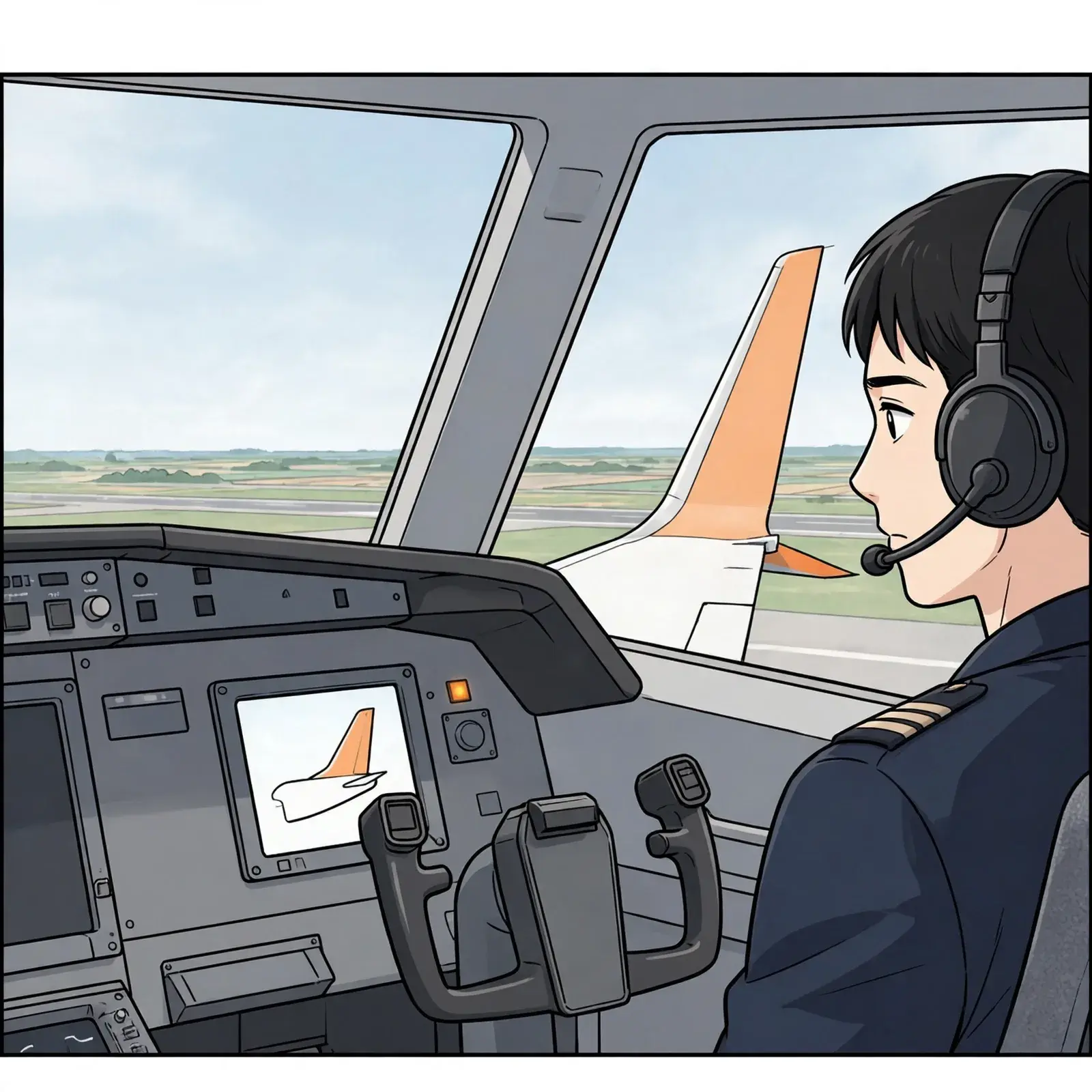
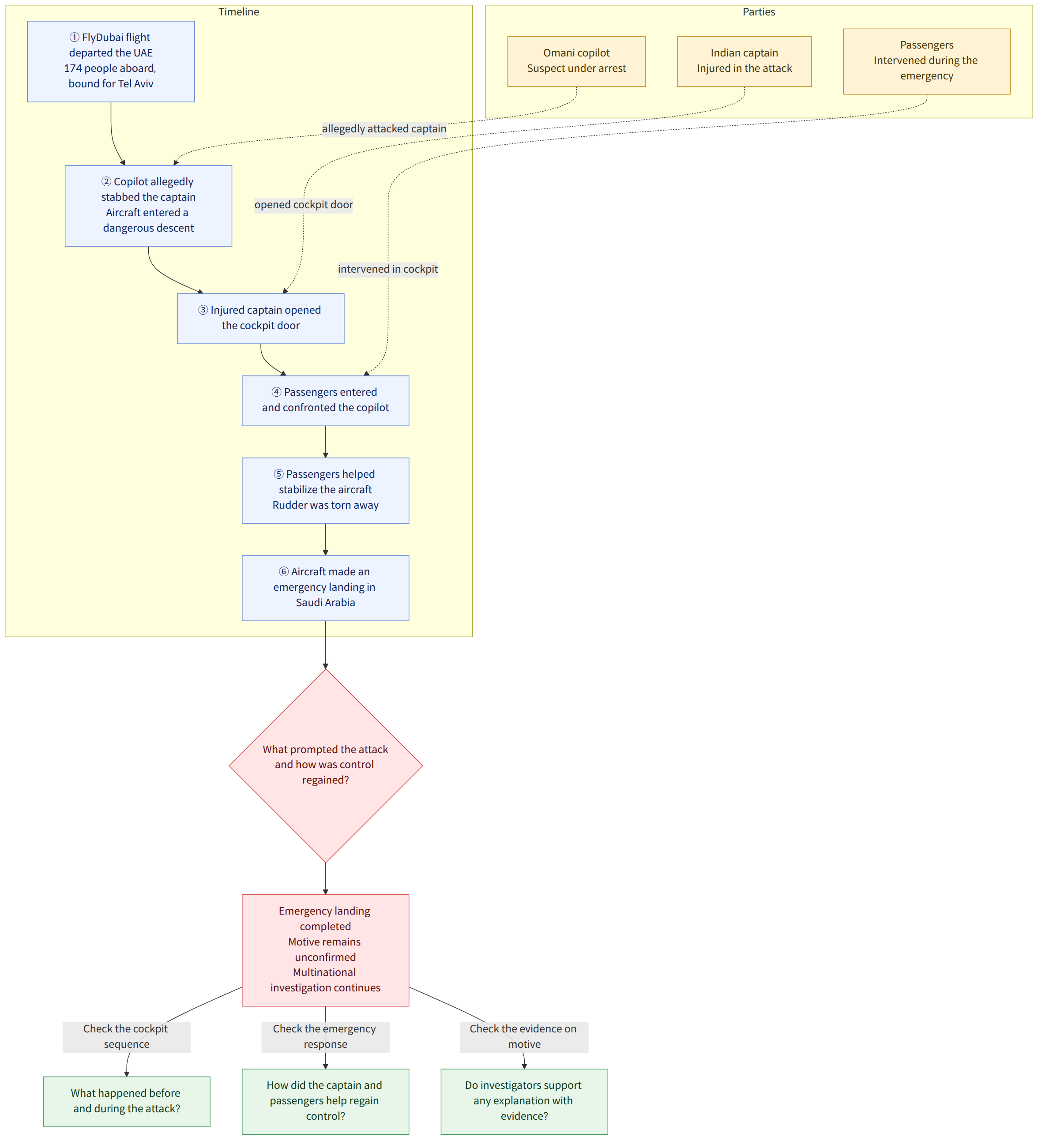
A FlyDubai aircraft carrying 174 people, most of them Israelis, was flying from the United Arab Emirates to Tel Aviv when the copilot allegedly stabbed the captain. The attack sent the plane into a steep, dangerous descent, turning an ordinary passenger journey into an emergency at cruising altitude.
The captain, an Indian national, was injured but reportedly managed to open the cockpit door and let passengers inside. The aircraft eventually landed in Saudi Arabia, after people on board intervened and helped bring the descent under control. Investigators have not yet publicly established what prompted the attack.
The immediate priority was to regain control of the aircraft and get everyone on board safely to the ground. The reason for the attack remains under investigation.
Passengers describe a desperate struggle
Passengers have described a chaotic scene in which they had to react quickly despite not knowing exactly what was happening. Asaf Rajuan, one of those who intervened, said he felt helpless in midair and acted on instinct to survive.
The injured captain’s decision to open the cockpit door allowed passengers to enter and confront the copilot, according to accounts shared after the incident. They reportedly helped stabilize the aircraft during its sharp descent. The plane’s rudder—the movable vertical surface on its tail that helps steer it from side to side—was torn away.
Why a steep descent is dangerous
An aircraft’s descent is normally controlled by its pilots, who manage its speed, direction and rate of altitude loss. A sudden, uncontrolled drop can place intense physical stress on the plane and make it harder for the crew to keep the aircraft on a safe course.
In this case, the reported damage to the rudder points to the severity of the forces involved. Investigators will need to establish how the plane was controlled after the attack and which actions helped it reach the ground safely.
A multinational investigation
The suspected attacker, an Omani citizen, is under arrest, according to a regional official briefed on the investigation. Saudi authorities are working with several countries, including Israel, to establish a motive and piece together what happened aboard the flight.
The United Arab Emirates, the United States and Oman are also involved. The incident crossed national boundaries: the flight departed from the UAE, was bound for Israel, landed in Saudi Arabia and involved a suspect from Oman. Cooperation among the countries may help investigators compare evidence and gather information from people connected to the flight.
- Saudi Arabia is involved because the aircraft landed there and local authorities are working on the case.
- Israel has an interest because the flight was bound for Tel Aviv and most passengers were Israeli.
- The UAE, Oman and the United States are also participating in the investigation, according to the official.
The motive is still unknown
Authorities are considering different possibilities, including terrorism and a possible mental-health crisis. These are investigative scenarios, not confirmed explanations: no conclusion about the copilot’s motive or condition has been announced.
Determining motive can require more than reviewing the events on the plane. Investigators may need to examine the sequence of actions, interview passengers and crew, and assess relevant records. Until that work is complete, it would be premature to treat any one explanation as fact.
What investigators may need to establish
- What happened in the cockpit before and during the attack.
- How the captain and passengers responded, and how control of the aircraft was regained.
- Whether the suspected attacker had a motive that can be supported by evidence.
- How the plane sustained damage and how it was brought in to land.
What happens next
The investigation will focus both on the attack itself and on the flight’s emergency response. Establishing a clear timeline can help authorities understand how the captain was injured, how passengers entered the cockpit and how the aircraft was stabilized before landing.
The incident also highlights how a crisis on a passenger plane can quickly involve people beyond the flight crew. Passengers are not a substitute for trained pilots, but in this case their intervention was part of the effort to control an unfolding emergency. The precise role each person played, and how the aircraft was landed, will need to be confirmed by investigators.
For now, the central questions remain unanswered: why the copilot attacked the captain, how the confrontation began and what evidence will ultimately explain the motive. Authorities have confirmed the suspect is in custody, but have not announced a final finding.