What happened aboard the Israel-bound flight
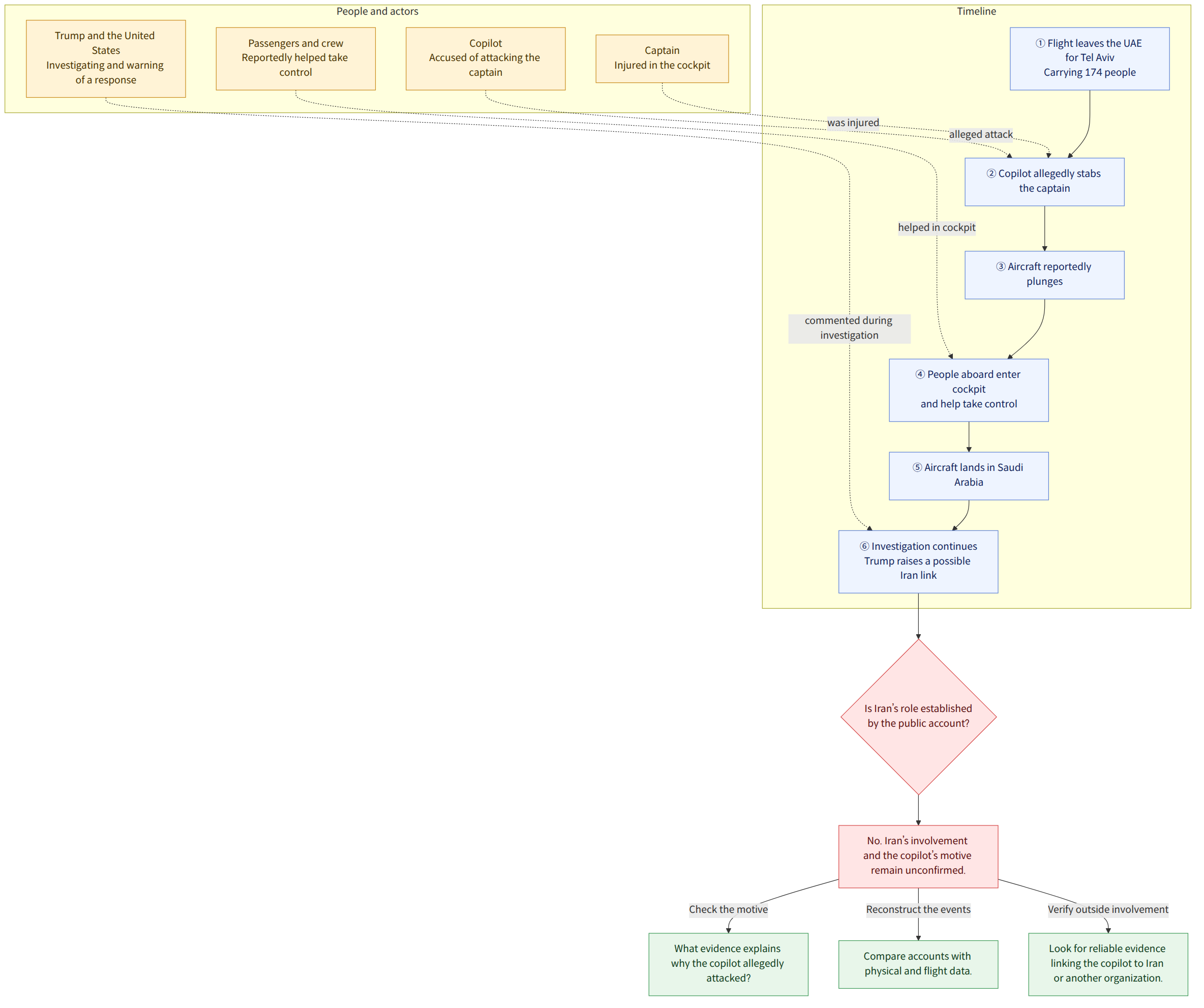
A FlyDubai flight traveling from the United Arab Emirates to Tel Aviv was carrying 174 people, most of them Israelis, when an attack in the cockpit disrupted the journey. The copilot allegedly stabbed the flight’s captain, leaving the captain bloodied and causing the aircraft to plunge, according to the initial account of the incident.
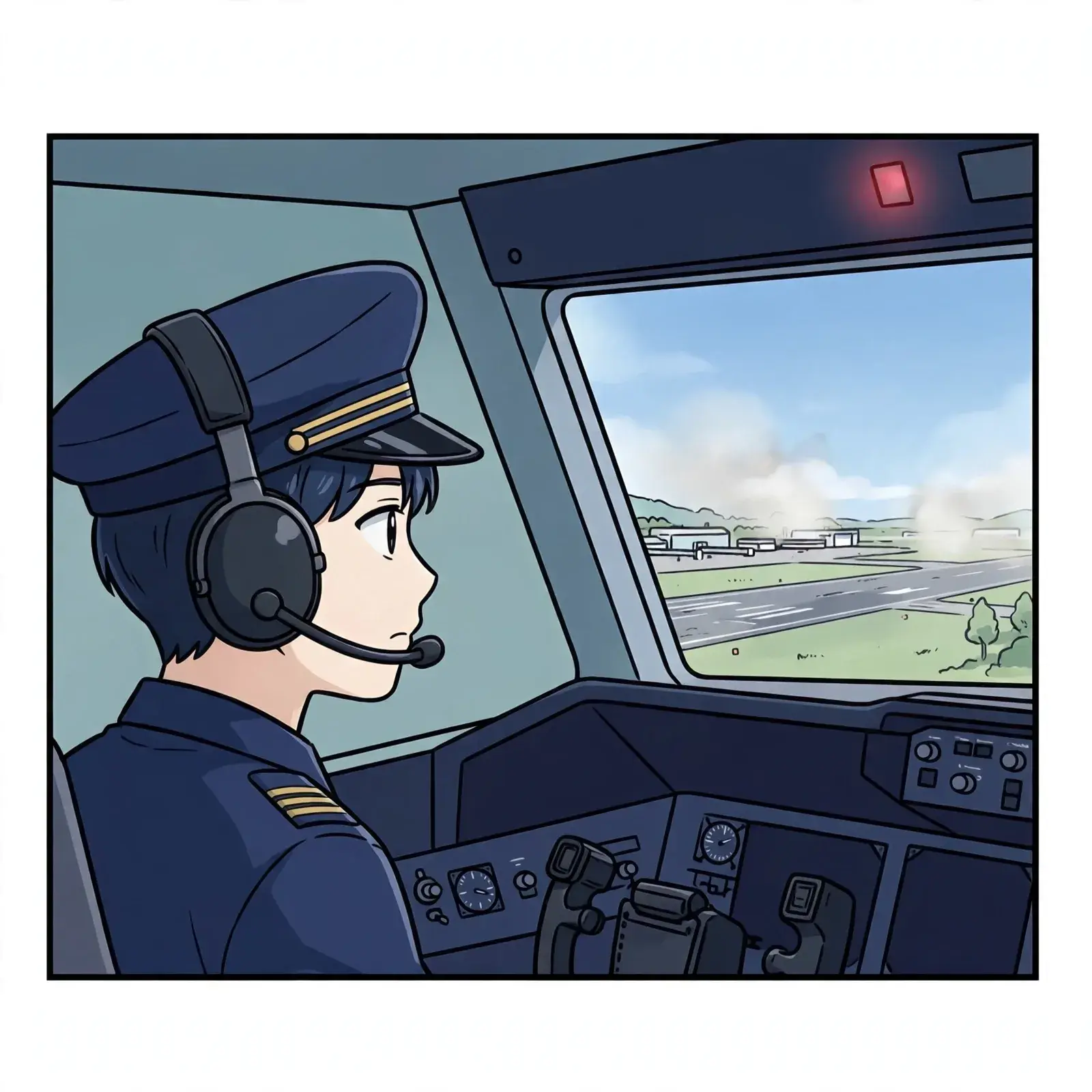
The cockpit is the compartment where pilots control an aircraft, much like the driver’s seat and controls in a car. With the captain injured and the plane in danger, other people on board reportedly got into the cockpit and helped take control. The aircraft ultimately landed in Saudi Arabia.
The account describes a sudden emergency in the cockpit, but the copilot’s motive and the full sequence of events remain under investigation.
Trump raises the possibility of an Iranian link
President Donald Trump was asked at the White House whether he had been briefed on a possible connection between the copilot and Iran’s government in Tehran. He said the United States was investigating and added that, based on what he was hearing, the answer might be yes. He did not provide evidence or further details to support that assessment.
Trump also warned that Iran would face a severe response if it was behind the attack. “They’ll be hit, very hard,” he said, while adding that the investigation was still underway. His remarks expressed a possible conclusion, not a publicly confirmed finding.
A suspected connection is not the same as a verified one. The available account does not establish that Iran directed, supported, or had advance knowledge of the alleged attack.
Why the distinction matters
A violent incident on an international flight can prompt urgent questions about security and responsibility. But determining whether an individual acted alone or had outside support requires evidence such as communications, travel records, financial links, and witness accounts. Investigators must establish those facts before governments can credibly attribute responsibility to another state.
What investigators still need to establish
- The motive: Why the copilot allegedly attacked the captain.
- The timeline: What happened in the cockpit and how the aircraft’s descent was brought under control.
- Any outside involvement: Whether there is reliable evidence connecting the copilot to Iran or another organization.
- The emergency response: How passengers and other people aboard helped regain control and prepare for landing.
Passengers’ role in the emergency
The initial account says passengers entered the cockpit after the captain was injured. Their actions appear to have been critical to the flight’s eventual landing, although the details of who took control, what instructions were given, and how the aircraft was stabilized have not been fully explained.
Commercial aircraft are designed to be flown by trained pilots, and a cockpit emergency can develop rapidly. Even a short loss of control may put passengers and crew at risk, especially when a plane is at altitude and traveling at high speed. In this case, the reported plunge underscores how quickly a dispute or attack inside the cockpit can become a danger to everyone on board.
The landing in Saudi Arabia brought the immediate flight emergency to an end, but it did not resolve the central questions about the alleged assault. Investigators will need to compare accounts from the captain, copilot, passengers, and crew with physical and flight data to reconstruct what happened.
The political stakes of attributing blame
Trump’s warning comes as the United States and Iran have faced longstanding tensions. A claim that Tehran was involved in an attack on a civilian flight could have consequences far beyond aviation, potentially affecting diplomacy and regional security. That makes careful verification especially important before any government takes action.
The president’s comments did not specify what form a U.S. response might take or what evidence would be required to establish Iranian responsibility. His statement that Iran would be struck “very hard” nevertheless signaled the possibility of military retaliation. Any response based on an unconfirmed attribution could intensify tensions and increase the risk of a wider confrontation.
What is known—and what remains unconfirmed
- Known from the initial account: The flight was headed from the UAE to Tel Aviv, carried 174 people, and landed in Saudi Arabia after an alleged cockpit attack.
- Reported: The copilot stabbed the captain, and people aboard entered the cockpit to help take control of the aircraft.
- Not established publicly: The copilot’s motive, the complete sequence of events, and whether Iran had any connection to the incident.
What comes next
The investigation is expected to focus on the alleged attack, the flight’s movements, and the circumstances that allowed the aircraft to land safely. Interviews and technical records can help establish how the plane descended and how control was restored. Those findings may also clarify whether the incident was an individual act or part of a broader plot.
For now, the distinction between the reported cockpit attack and Trump’s suggestion of an Iranian link remains central. The first concerns what allegedly happened aboard the plane; the second is a question of responsibility that investigators have yet to resolve publicly. Until evidence is presented, the possible connection to Tehran should be treated as unconfirmed.